
I’ve been in a bit of a rut with my writing. For months, I couldn’t run out of things to think about, to question, to put into words. Then I left for India—without a return date, without much structure—and somewhere along the way, the writing stopped. Not the thinking (that would never happen), but the act of sitting down and shaping those thoughts into something coherent was out of reach.
After roughly 1,500 kilometers across Northern and Central India, I’ve collected gobs of material that I don’t know what to do with just yet. Reconnecting with old friends and unexpected encounters with strangers have been wonderful. Along with the kind of head-scratchy moments that seem to exist only here. The stories and the friction are right in my face. But organizing it all and making sense of it has felt just out of reach. Maybe that was supposed to happen just as it did.
People keep asking me the same question: of all places, why India? It’s a fair question. My answer has been simple, maybe too simple. India is chaos and contradiction. It feels familiar because my own mind isn’t clean or linear either. It’s fragmented, emotional, often contradictory. These opposing truths sit next to each other without resolving. India doesn’t hide that. It lives it out loud, in your face, right in front of you. And most of the time, that feels strangely familiar and natural to me.
Until it rubs me the wrong way.
Where It Shifted
I found that edge in Varanasi. During the day, walking the ghats, I understood why people come here. There is a rhythm to it, blessings from the priests, prayers, bathing in the Ganges, with hopes for the future. A kind of quiet that lives inside the noise of the day to day in India. Something ancient and devotional needs no explanation. But at the end of the day, getting home became its own ritual of friction.


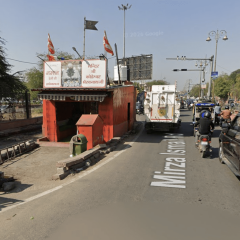
The narrow streets near the ghats left only enough space for cows, motorbikes, the strewn manure and garbage but not much else. The streets funneled everything into tighter and congested channels that spilled onto overcrowded main roads filled with foot traffic, pedal rickshaws and motorbikes. This is where the tuktuk and taxi drivers waited.
I would check Uber first, just to anchor myself. One hundred and fifty rupees. Then the negotiations began. Five hundred. Seven hundred. The numbers came easily to them, delivered with a practiced confidence. They told me I would never get home no matter what Uber said.
At first, I said no politely, then more firmly, but it didn’t matter. The responses adjusted, the offers shifted, a crowd began to form around me. The space became tightened and closed in on me. What should have been a simple exchange grew repetitive and insistent.
After a few days, I noticed a change in myself. Just as they had their spiel, I had begun to build mine. I started my mental preparation before they spoke. I looked at their clothing, their jewelry, their posture. I wasn’t listening anymore. I was anticipating. Before a single word was exchanged, I had already decided that it was a scam.
As soon as I believed that thought to be true, it shaped everything that followed. My tone and posture changed. I stopped seeing them as individuals with the same struggles as me. I said things I don’t usually say, pushing back before anything had fully formed. At one point, I even appealed to morality, asking whether they would treat their best friend’s mother this way. It didn’t feel right. I realized it wasn’t really about them anymore. This was the reason I wanted to be in India. I had my own internal work to do.
Listening to myself, what surprised me wasn’t just what I was saying, but how I was saying it. My voice would rise louder and sharper to cut through theirs. So quickly, before I had time to keep it in check. Not once by accident, but enough times that it stopped feeling like an exception. The first time I was caught off guard. The second time, less so. By the third, that edgy and closed off response was readily available to me. And the uncomfortable truth is, it worked. The dynamic shifted. I gained control. And once I felt that, it became easier to reach for it again.
I told myself I was simply navigating the system, that this is how things work here. There is some truth in that. But it isn’t the whole truth. I wasn’t just responding to the system. I was learning how to be more strategic, more guarded, more preemptive. I stopped meeting people where they are and started working angles, reading situations for advantage rather than entering them with real openness.
The Pattern
What unsettled me wasn’t that it happened once. It kept happening. Different situations, same pattern.
On the streets it was the same repetition. Saying no and not being heard. Not once, not twice, but over and over again until “no” no longer felt like a complete sentence. It became something I had to defend, reinforce, and sometimes emphasize just to create space for myself.
With the Airbnb’s… the friction was a little quieter. Expectations didn’t match reality, and every conversation carried a slight misalignment from the truth. Nothing overtly confrontational, but enough ambiguity that I stopped taking things at face value. I noticed I was no longer taking anything at face value. I found myself checking, comparing, interpreting tone and what was left unsaid.
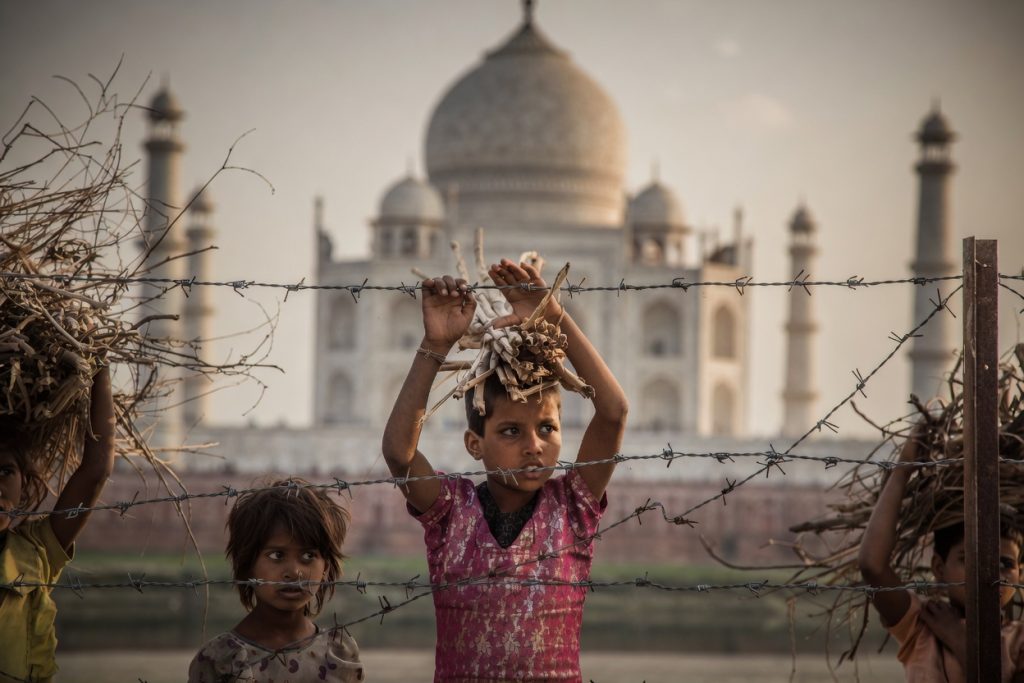
With the children begging money and food… a completely different story – much harder on the heart. It wasn’t transactional at all. The first time, I stopped without hesitation and bought food. Within seconds I was surrounded. Hands pulling at me, voices overlapping, more children and their mothers appearing from out of nowhere. Whatever I gave would never be enough. The next time children started begging, I hesitated. Not because I didn’t feel the tug on my heart, but because I couldn’t afford to feel this every single time.

In one crowded market, I felt my fanny pack being unzipped. I turned and caught a young man’s hand inside it. The shop owner shouted and he walked away, but something rose up in me. I followed him. Closing the distance. I got in his face and said something angrily—I don’t even remember what—but it was enough to stop him in that moment.
These moments didn’t stop. Over time, I began to pull back. A pause before I decided to stop and engage. A hesitation that wasn’t there before. Then eventually, just deciding to walk past. Not because I stopped feeling, but because I couldn’t stay open to those feelings every time. I started choosing when to engage and when not to, and that choice didn’t always feel clean.
Across some of these moments, there was a kind of dishonesty within myself that was difficult to name. Not always blatant or malicious, but present enough that it began to shape how I entered every interaction. I stopped waiting to see what was true. I started believing my own story before I could see the reality.
What Stayed With Me

What stayed with me wasn’t any one interaction, but how little resistance I felt to becoming that closed off version of myself. More frustrated, more irritated, anticipating what would come next before it happened. It wasn’t something I had to construct. It was already there, close to the surface, waiting for the right conditions. Once it emerged, I moved easily, almost instinctively, because it felt as if I had done this before.
When I finally reached a price with the tuktuk drivers, or when I walked past the begging children, it didn’t feel like relief. It felt like I had won something. But I hadn’t come here to win. I had come to experience, to move with the rhythm of the place, to stay open to what it might show me. But in some of those moments, I wasn’t open. I was calculating. Protecting myself.
Part of me understands why that version exists. The instinct to protect is familiar and something I know well. It works. But I don’t like what it asks of me, or who I become I when it tries to take over. I’m not sure those two parts of myself can reconcile cleanly. I’ve spent much of my life trying to soften those rough edges, trying to stay open even when the world pushes back hard. India has shown me how quickly that softness can slip away under pressure, and how much conscious effort it actually takes to hold onto it.
I still want to remain soft, even in the face of all this contrast and contradiction. Not because it’s easy or always wise, but because it feels more true to who I’m trying to become. There is a time and a place for the harder edges, I suppose, but I don’t want them to become my default. The real challenge now is learning how to carry both: the part of me that knows how to protect itself, and the part that refuses to close off completely.
So when people ask why India, I could still say it is the chaos, the contradiction, the intensity. But the more honest answer is simpler. It revealed parts of myself I can’t unsee. It held up a mirror I couldn’t look away from. It showed how conditional my openness really is and how much attention and effort it takes to keep choosing to stay open when closing would be easier.





Carol Karpson Schoenleber
Thanks, Maurice. Confrontations of all kinds. Whew! How to handle it all and keep your heart open! Quite a challenge. I so admire your ability to let go and travel to new territories – courageous and obviously enlightening!!!