

In all the years of my travels, I have enjoyed seeing architecture and the various styles that have evolved over the centuries. Much of the architecture of the past surrounds churches, synagogues, and temples, as that is where much of the economic resources were once directed. Over time, I have become more selective about the temples I choose to visit and where I invest my time. This time, I had a clear direction.
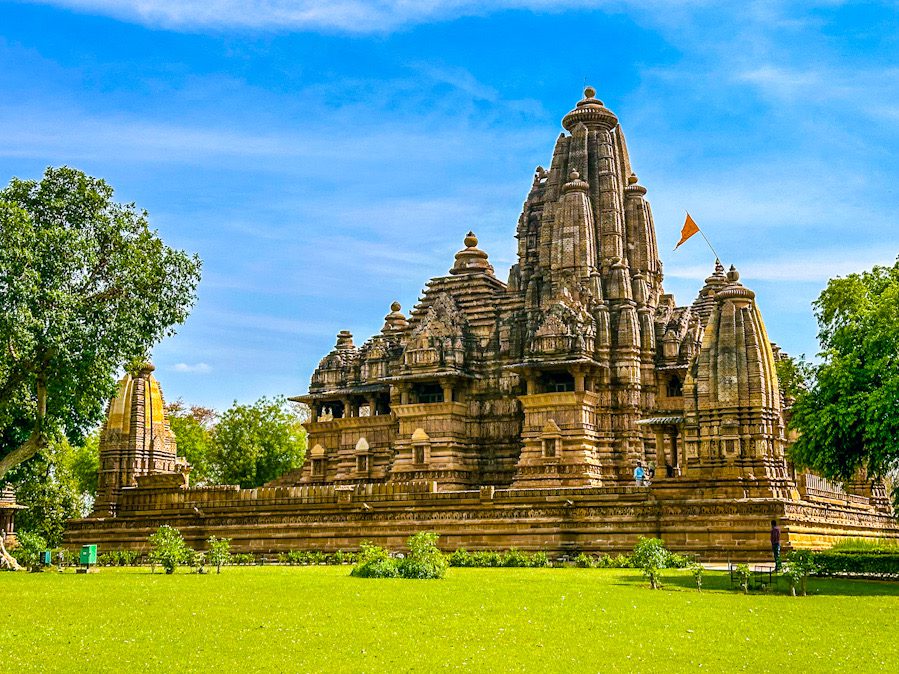
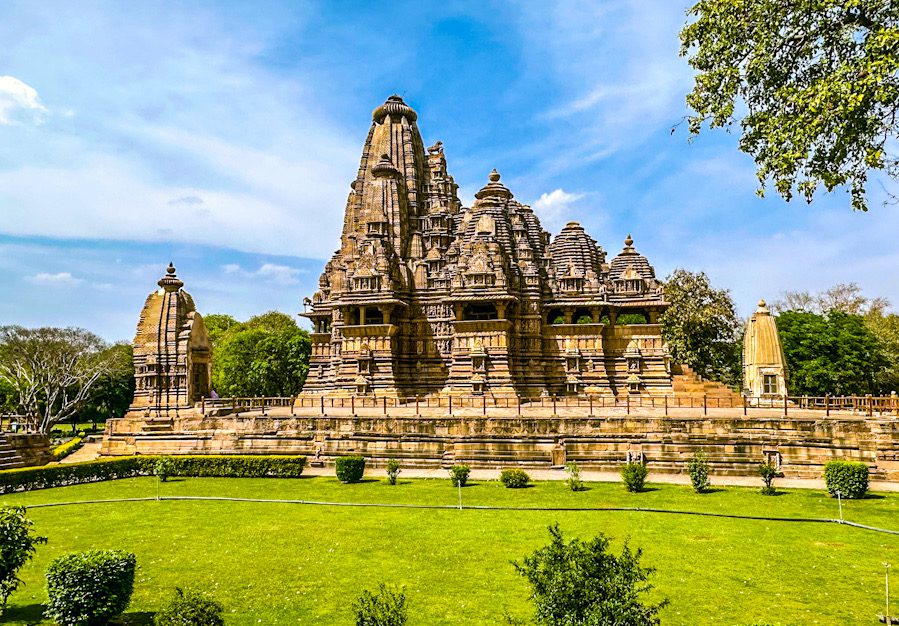
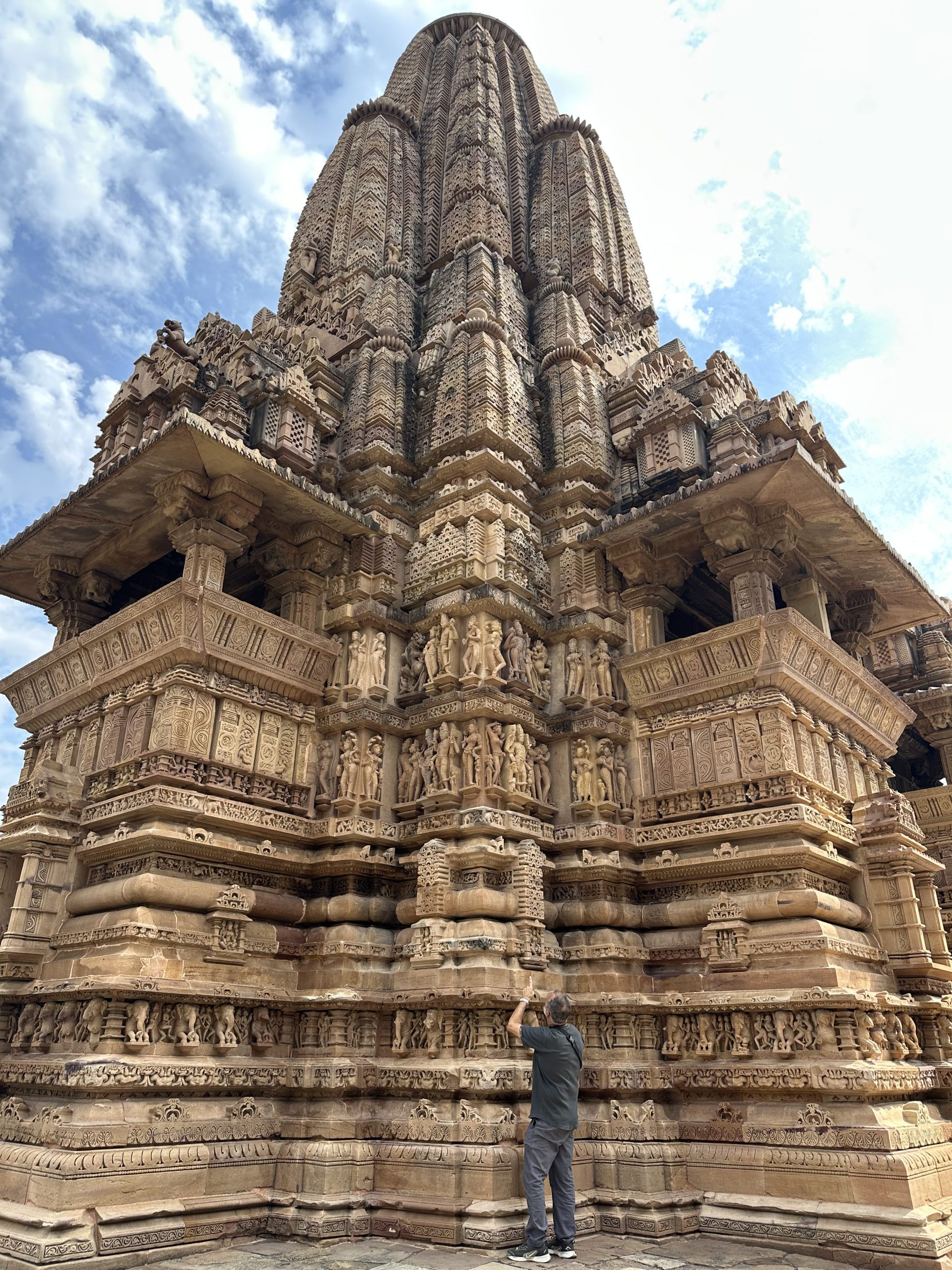
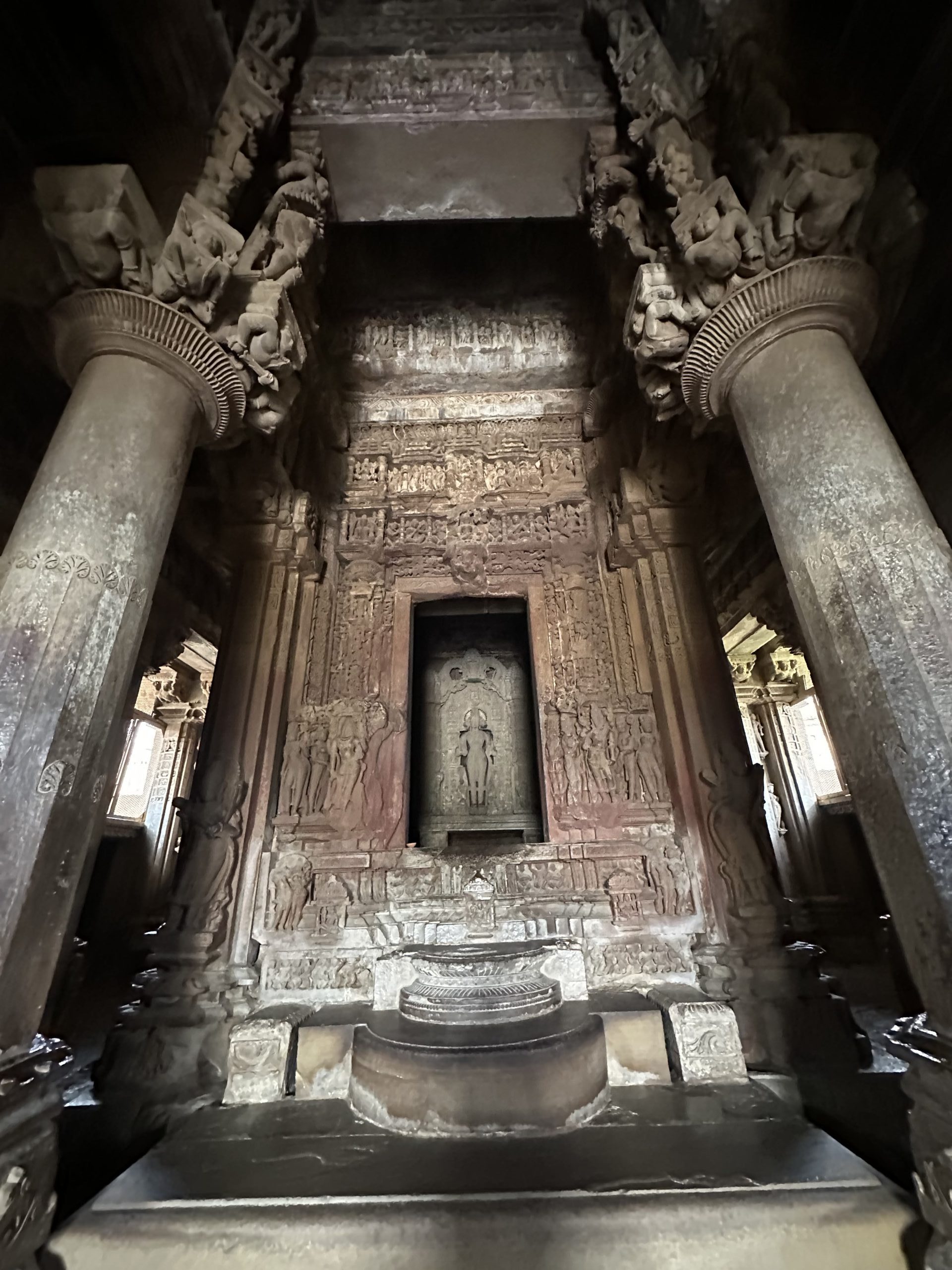
I have been drawn to go and see the Kandariya Mahadeva Temple in Khajuraho, India. If I am honest, the draw was because I have seen many pictures of the famously erotic scenes carved in sandstone. As you all know, sex sells. But after I landed there and received more information about the history, something shifted. No surprise there; India has a tendency to do that to Western journeyers.
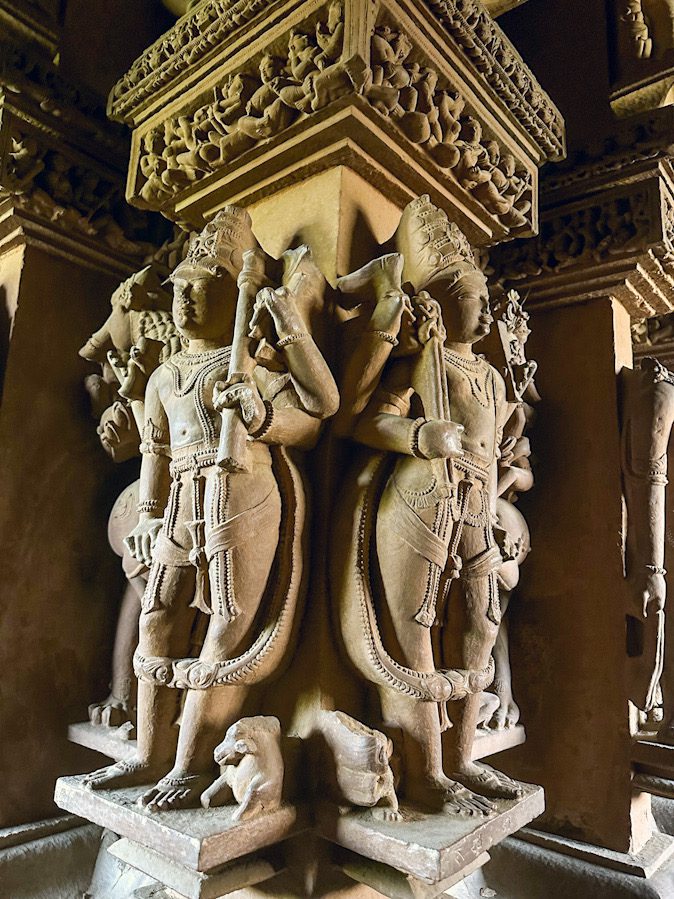
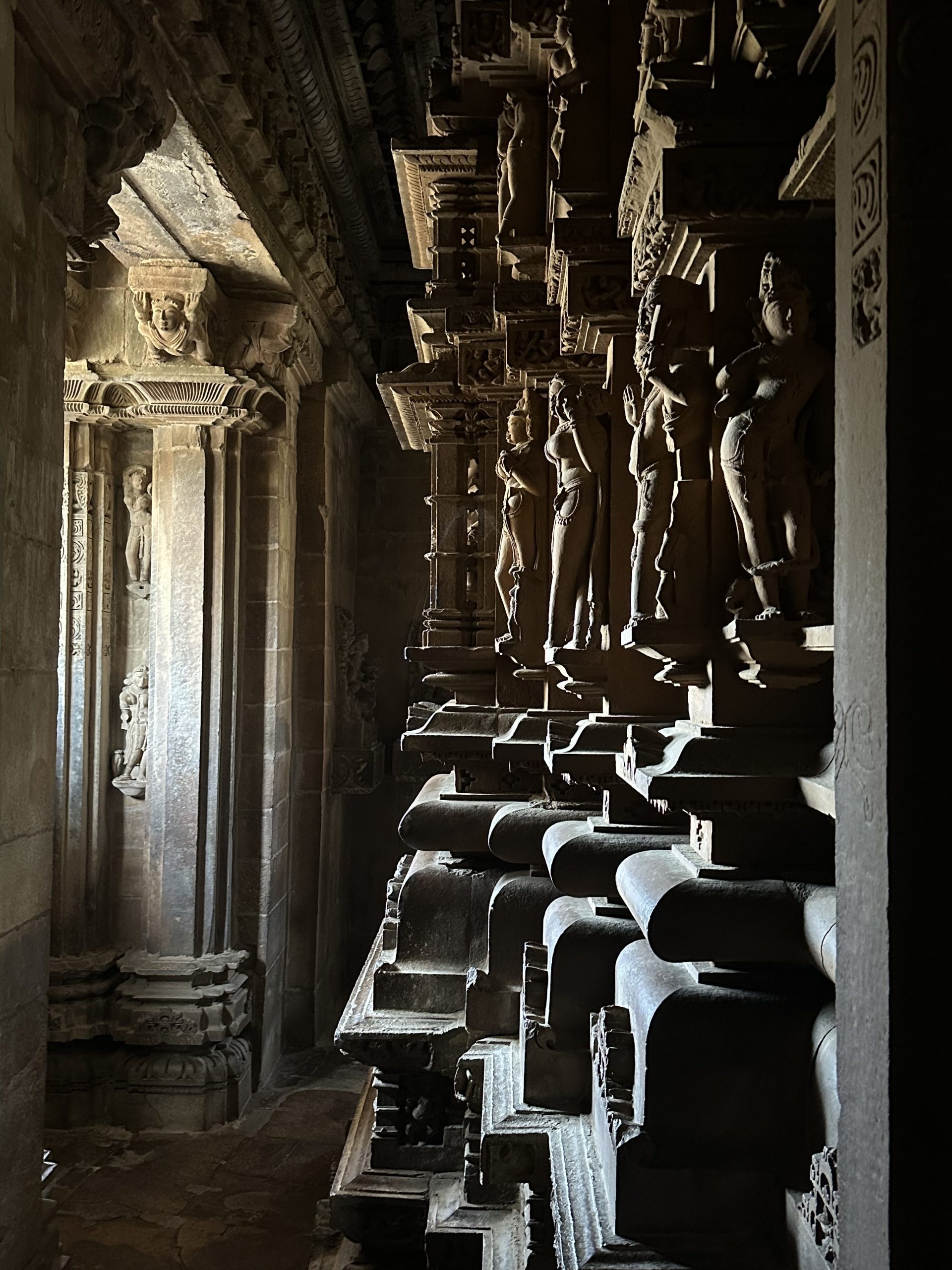
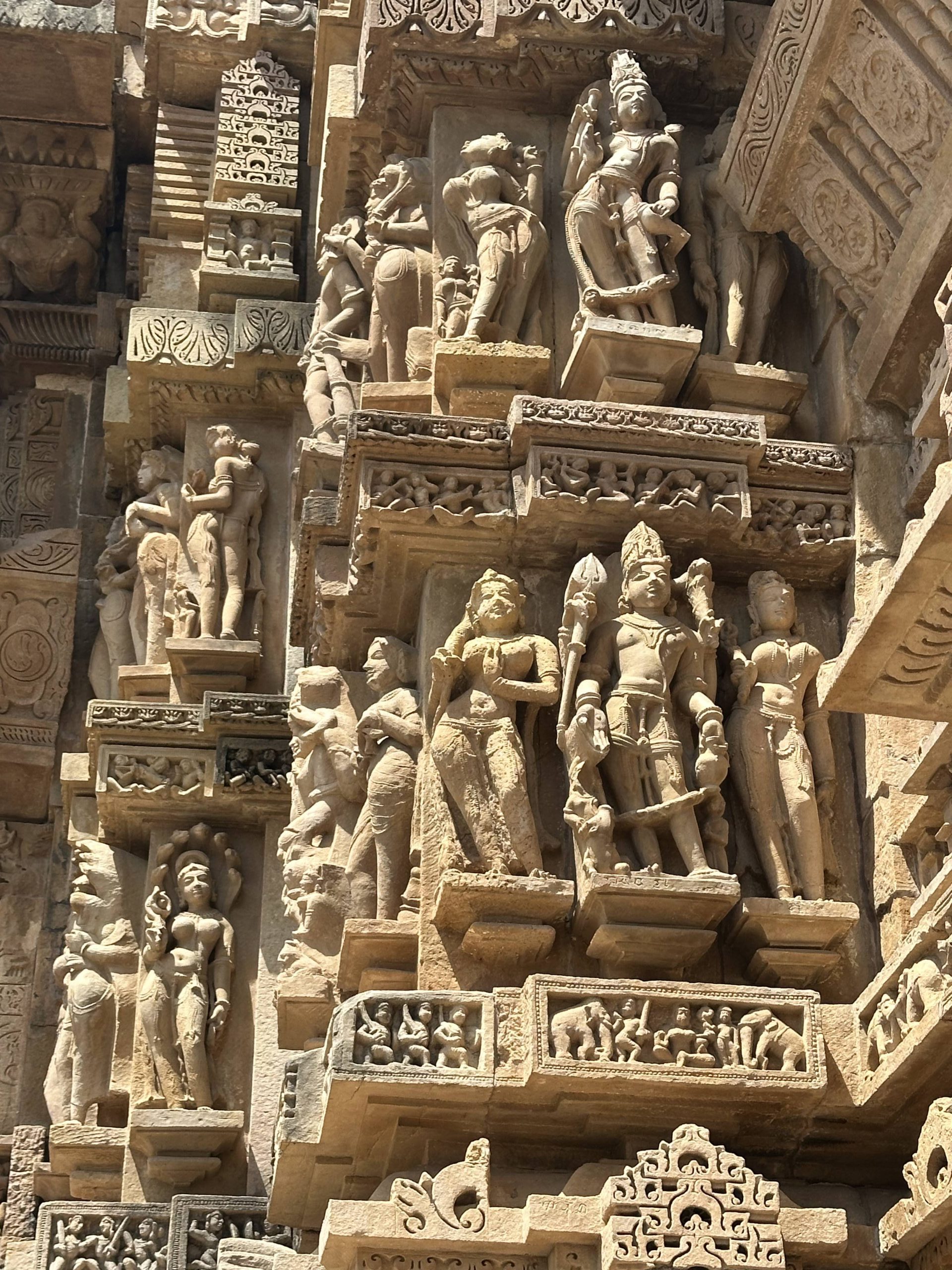
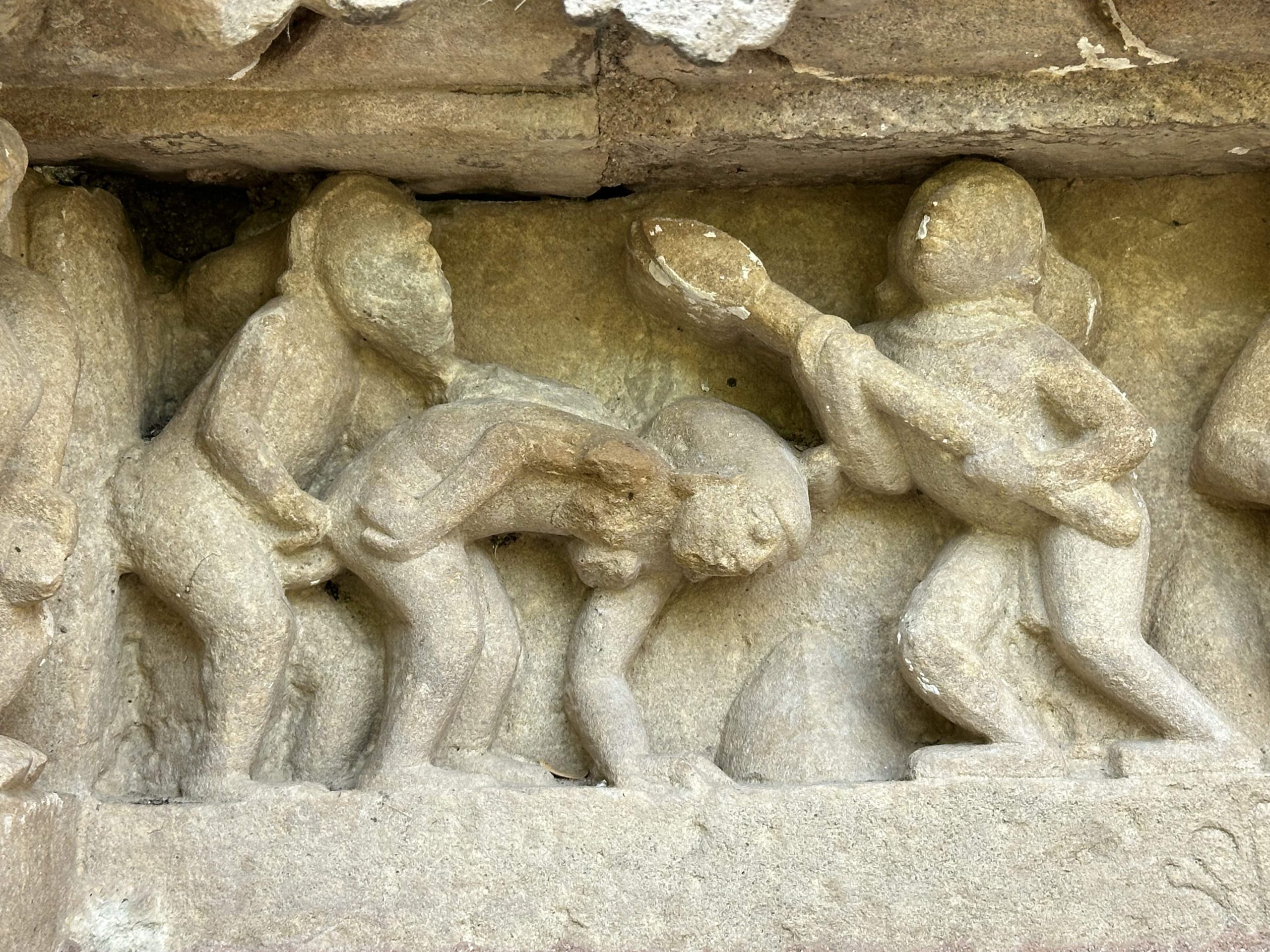
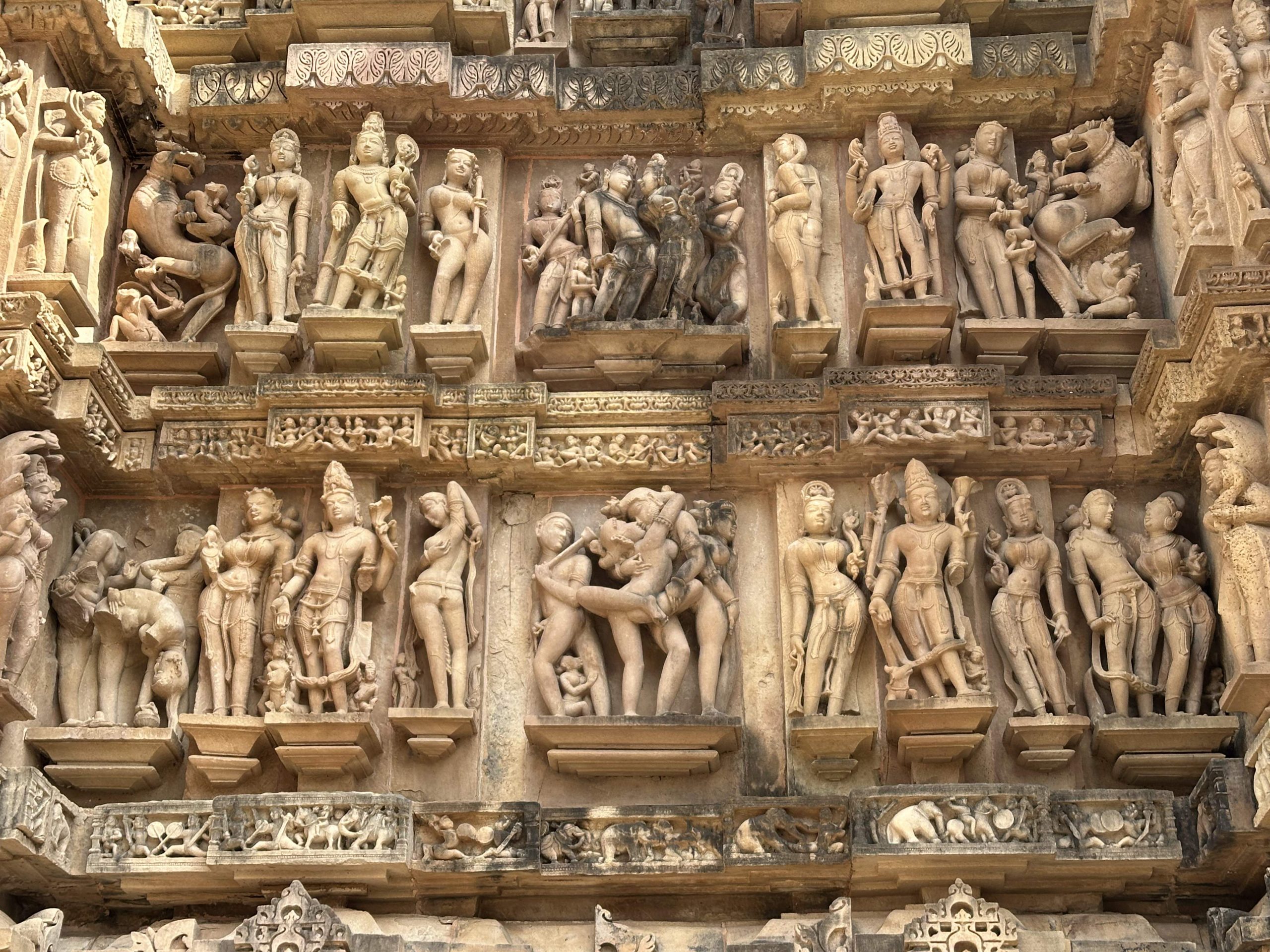
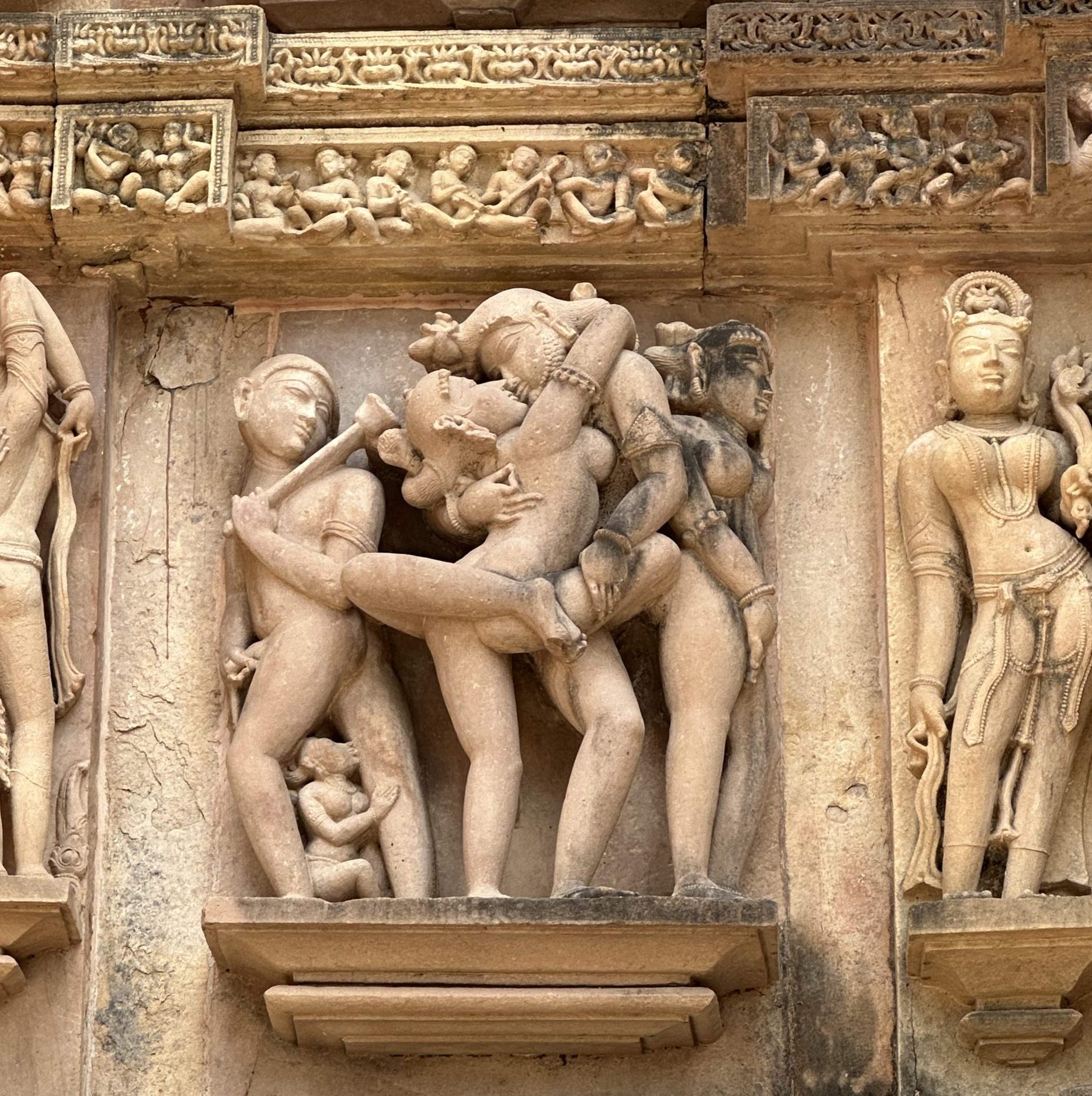
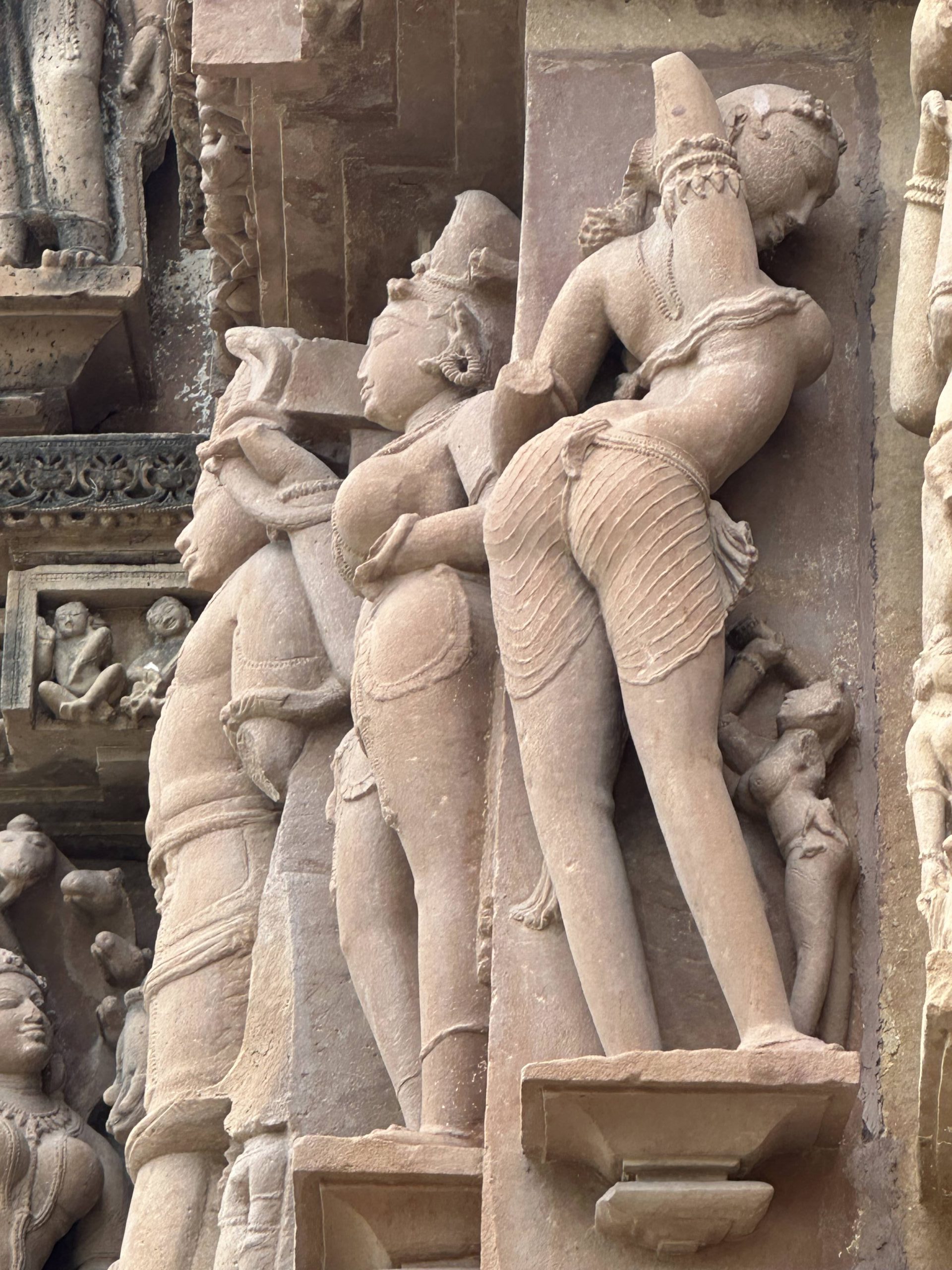
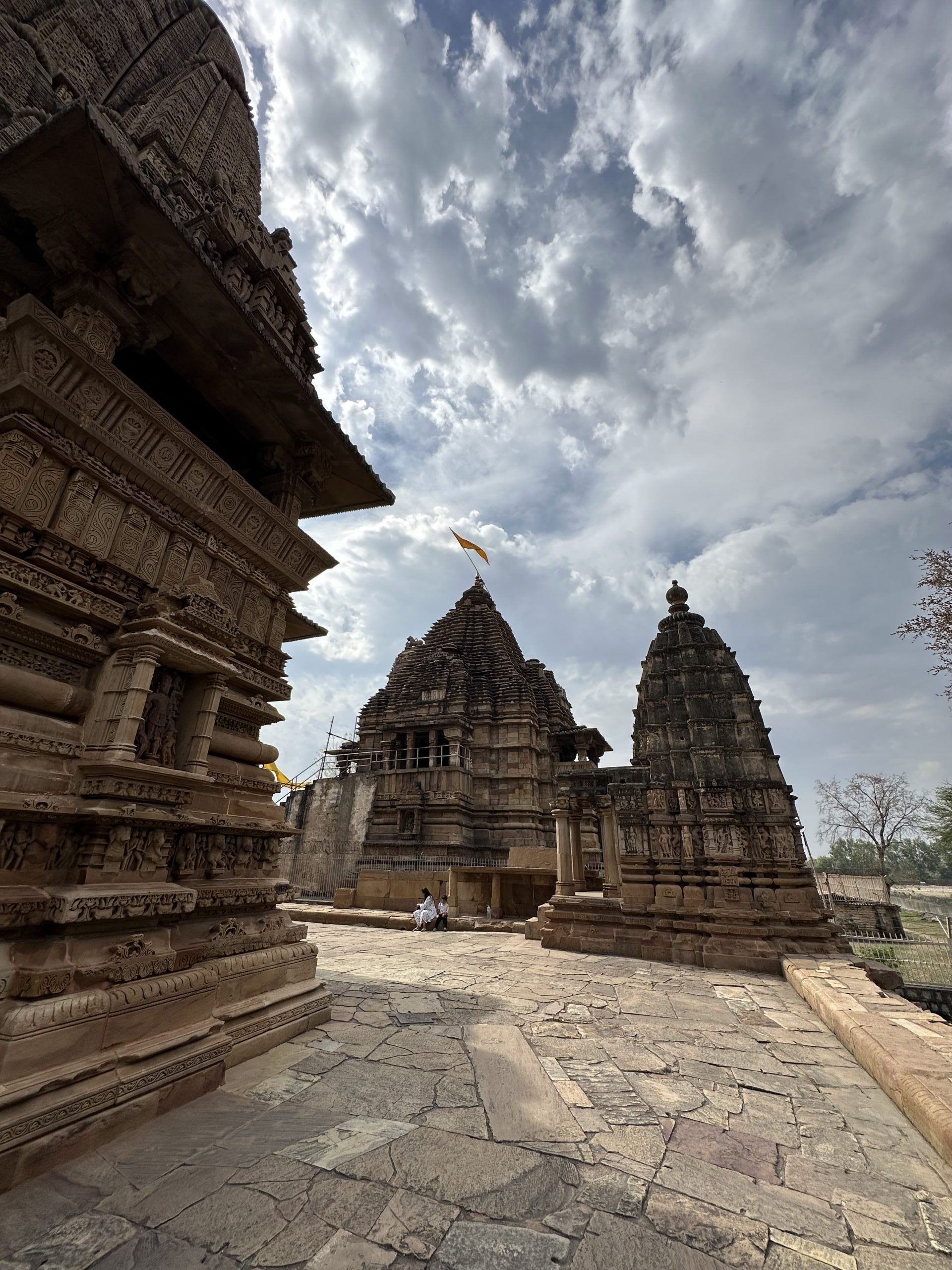
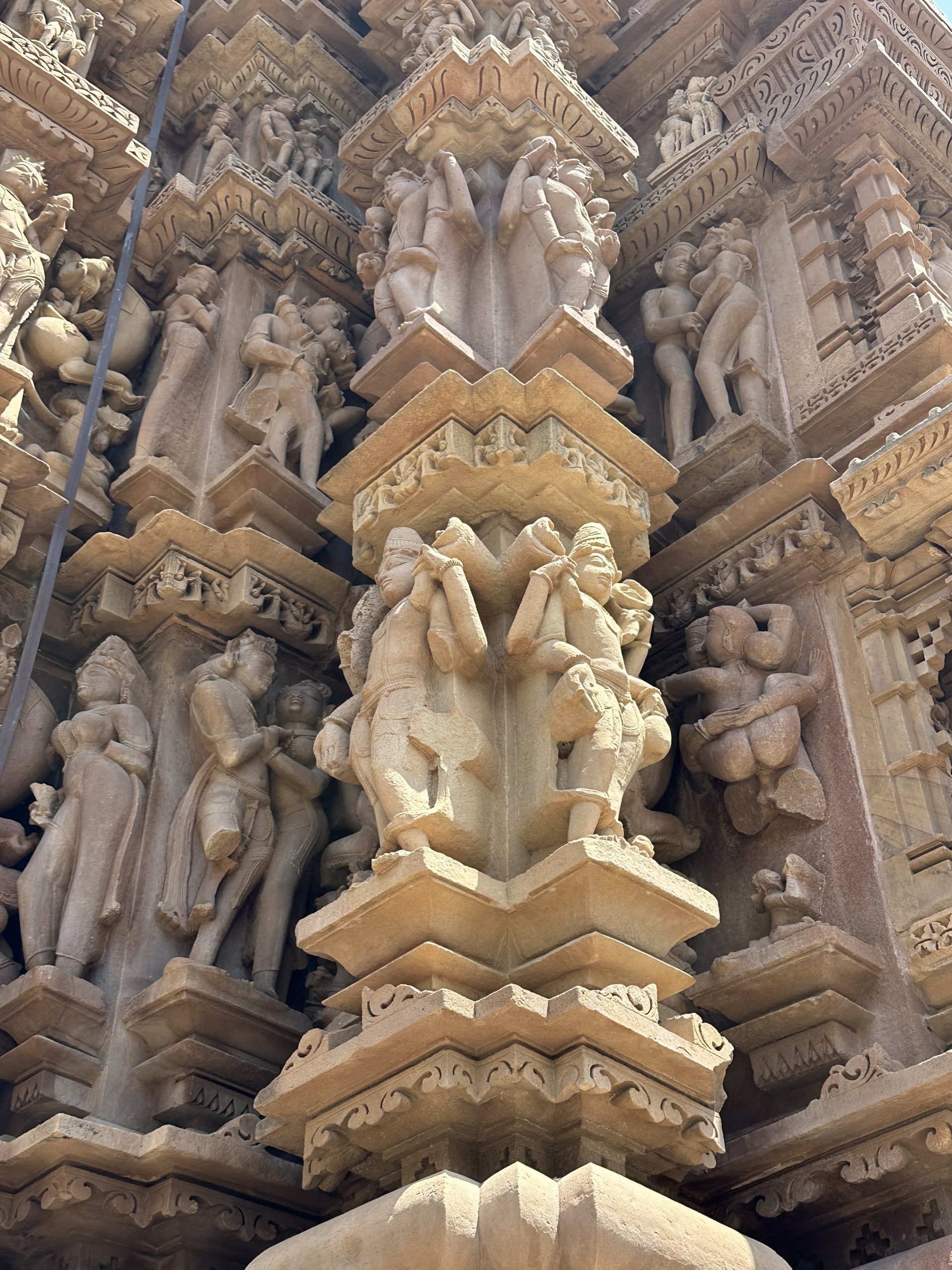
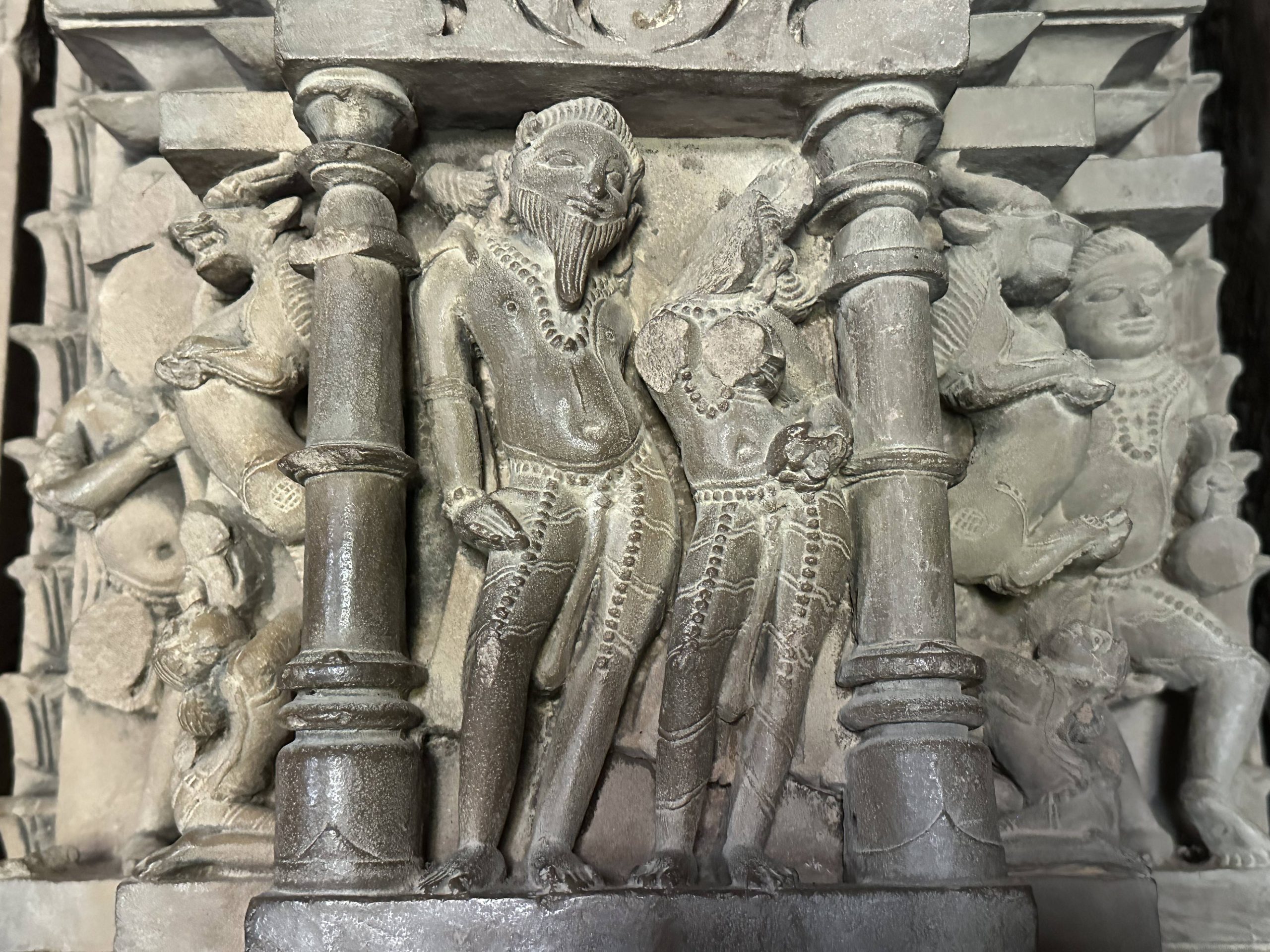
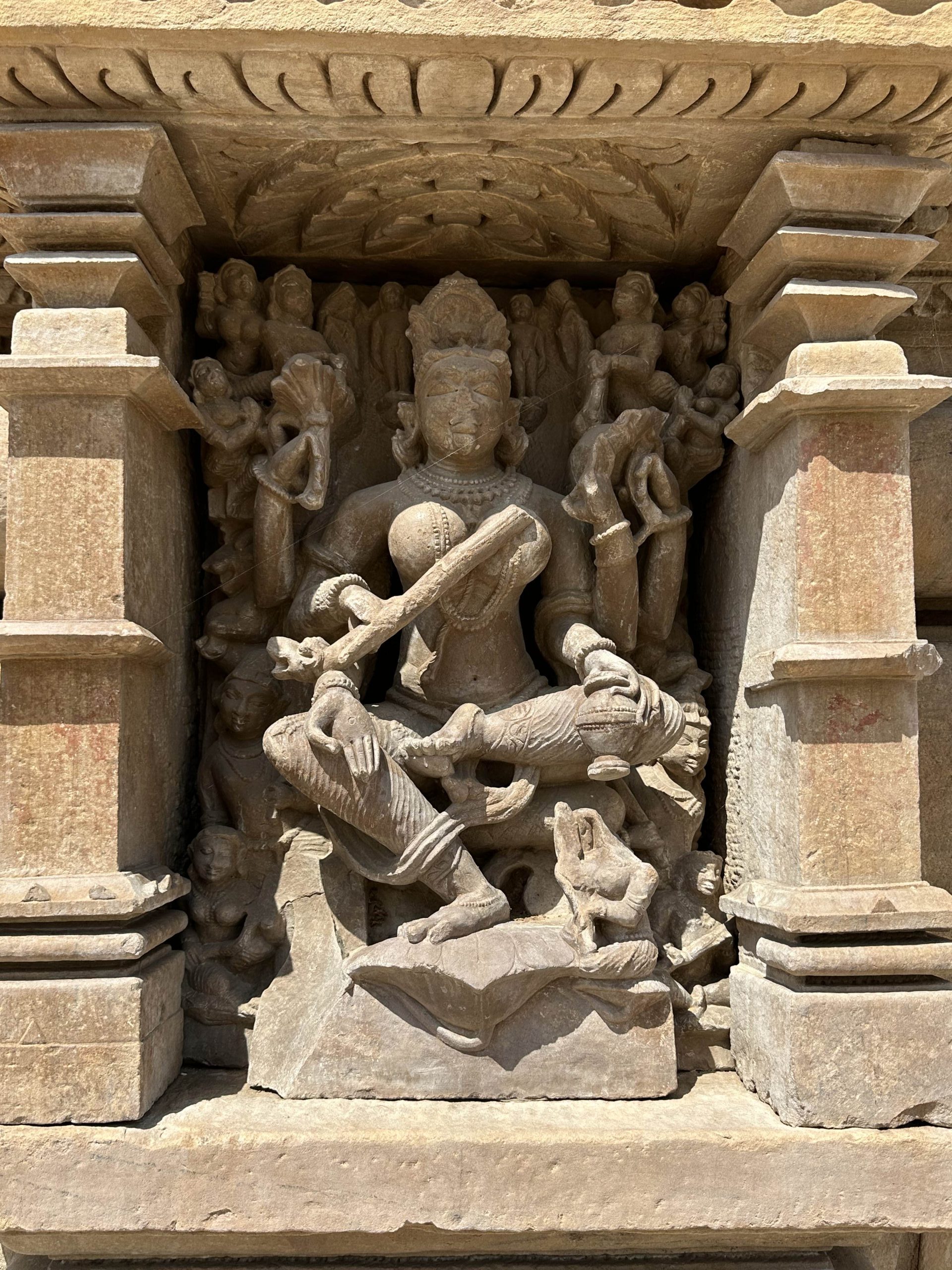
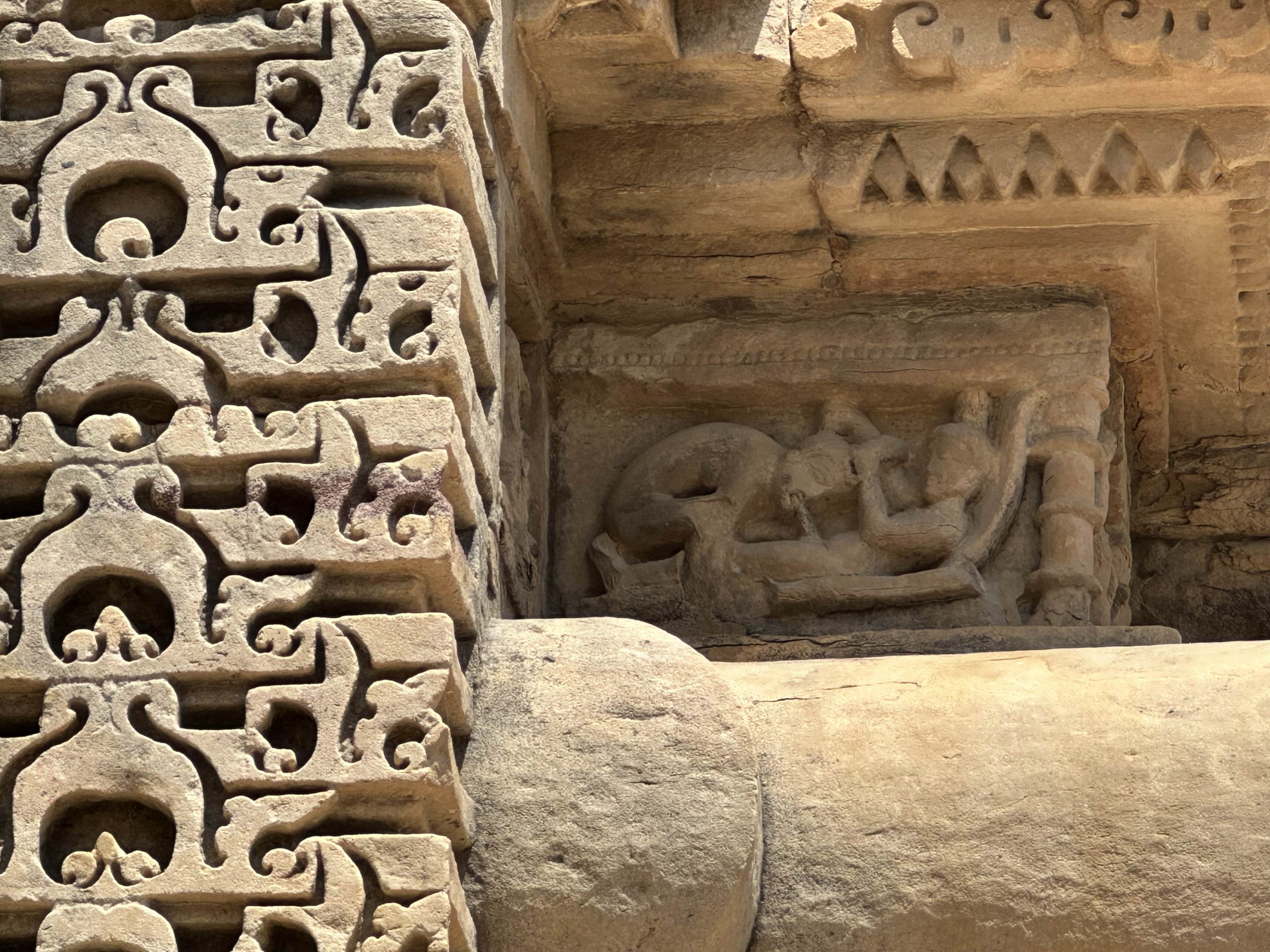
The Khajuraho Group of Monuments is a UNESCO World Heritage Site in Madhya Pradesh, India, well known for its 9-12th century Hindu and Jain temples. Built by the Chandella dynasty, these structures are celebrated for their Nagara-style architecture, intricate sculptures, and detailed carvings depicting daily life, deities, and the well marketed erotic scenes. Let me be clear about something, those erotic scenes represent only 10% of the carvings in these temples, even though they are primarily marketed for their Kama-sutra carvings.
(This video below is over an hour long… I recommend fast forwarding a bit…. the quality is great and you can get a really good idea about the temple grounds and the sculptures.)
Central India
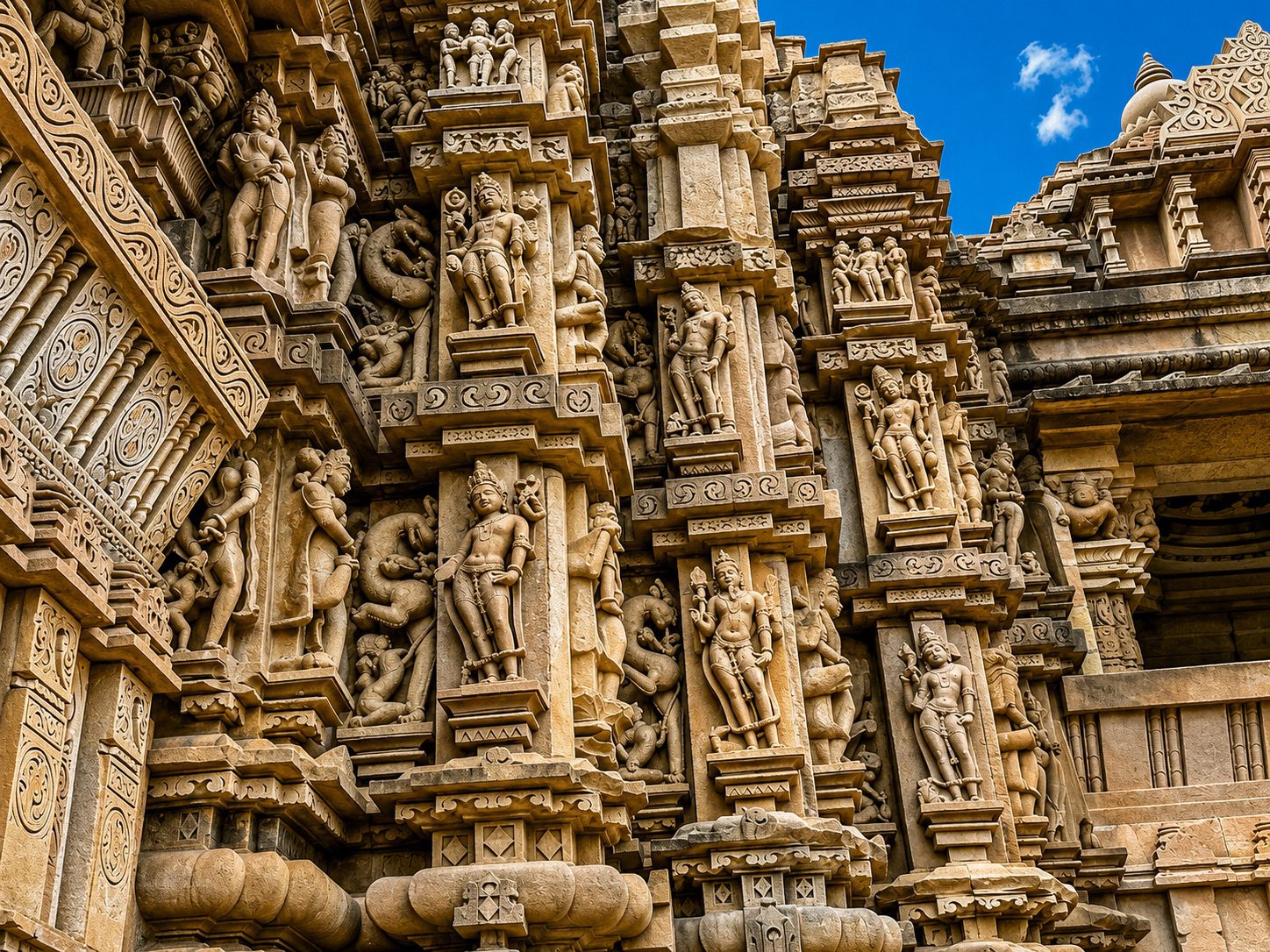
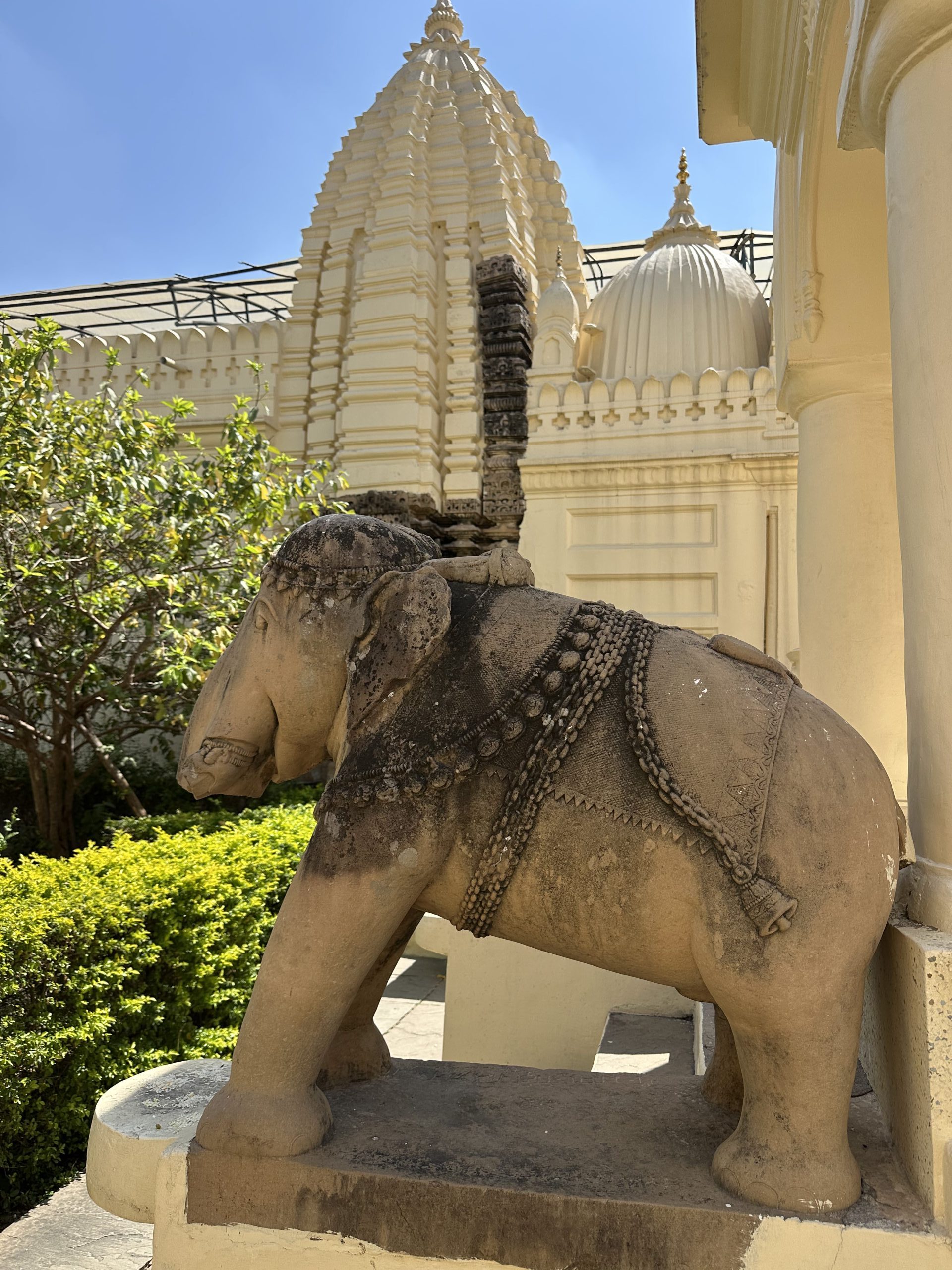
After weeks inside a few highly populated cities, it was nice to land in the quiet small town of Khajuraho. The incessant horns almost stopped, and the big city hustle quieted. It was the end of the winter high season, and the airlines were about to stop their flights into Khajuraho, leaving travel to the trains and busses. This was a town built around the UNESCO temples.
As the slow season was starting, many guides and businesses were quiet and eager to grab the few tourists that remain. It never takes long for a group to form around me, all wanting to sell me something. It also didn’t take long for me to tell them to back off and make some space. To their credit, they were always considerate of that demand.
There were a few nature reserves, waterfalls and a safari expedition nearby, but my interest was solely in the temple sites. This was lucky, as all the safari slots were booked and I had been put on a waiting list anyway.
The Temples
I was ready to ask one question to potential guides to see which one would be a good fit for me. “How would you explain the erotic sculptures being only 10% of the entire temples and how tourists make such a big deal of them?” The wisdom from one of the older men was enough for me to make my decision. This was after parsing through several other guides who claimed to be certified but could not produce the appropriate identification. It was yet another reason to do your homework and ask the right questions. Just another source for scamming in India.
The temple grounds were well maintained, and tourism was at a minimum for my morning start. There was no competition for positioning for the perfect selfie. I only had to wait a minute or two and get the photo of my choice. This was a world away from the other places I had just visited.
What Was Different?
There was something different about these temples than all the other ones I’ve seen throughout the world. There were stories to be told through the advanced engineering of the Chandella dynasty. Knowledge that allowed these structures to withstand centuries of weathering.
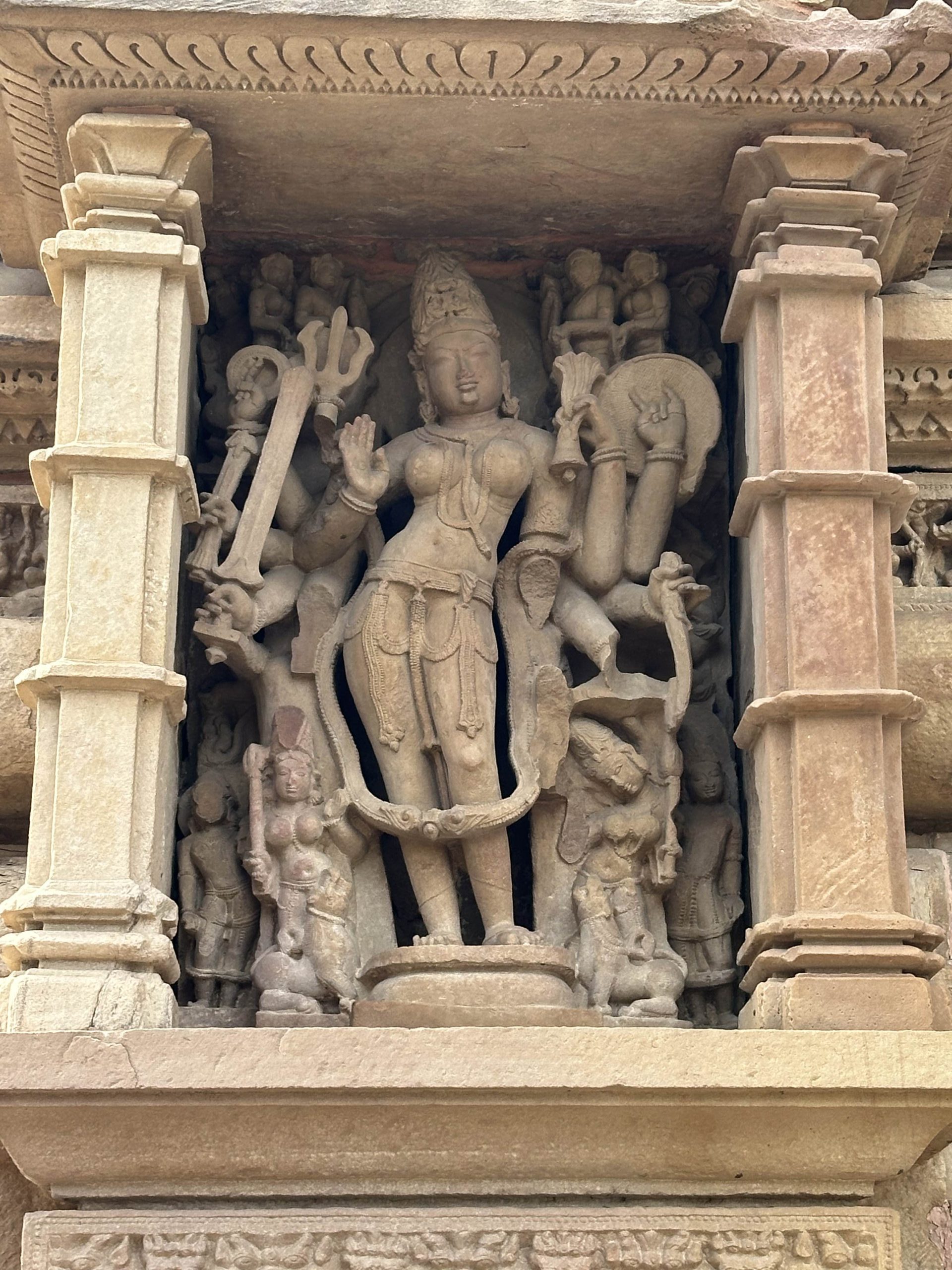
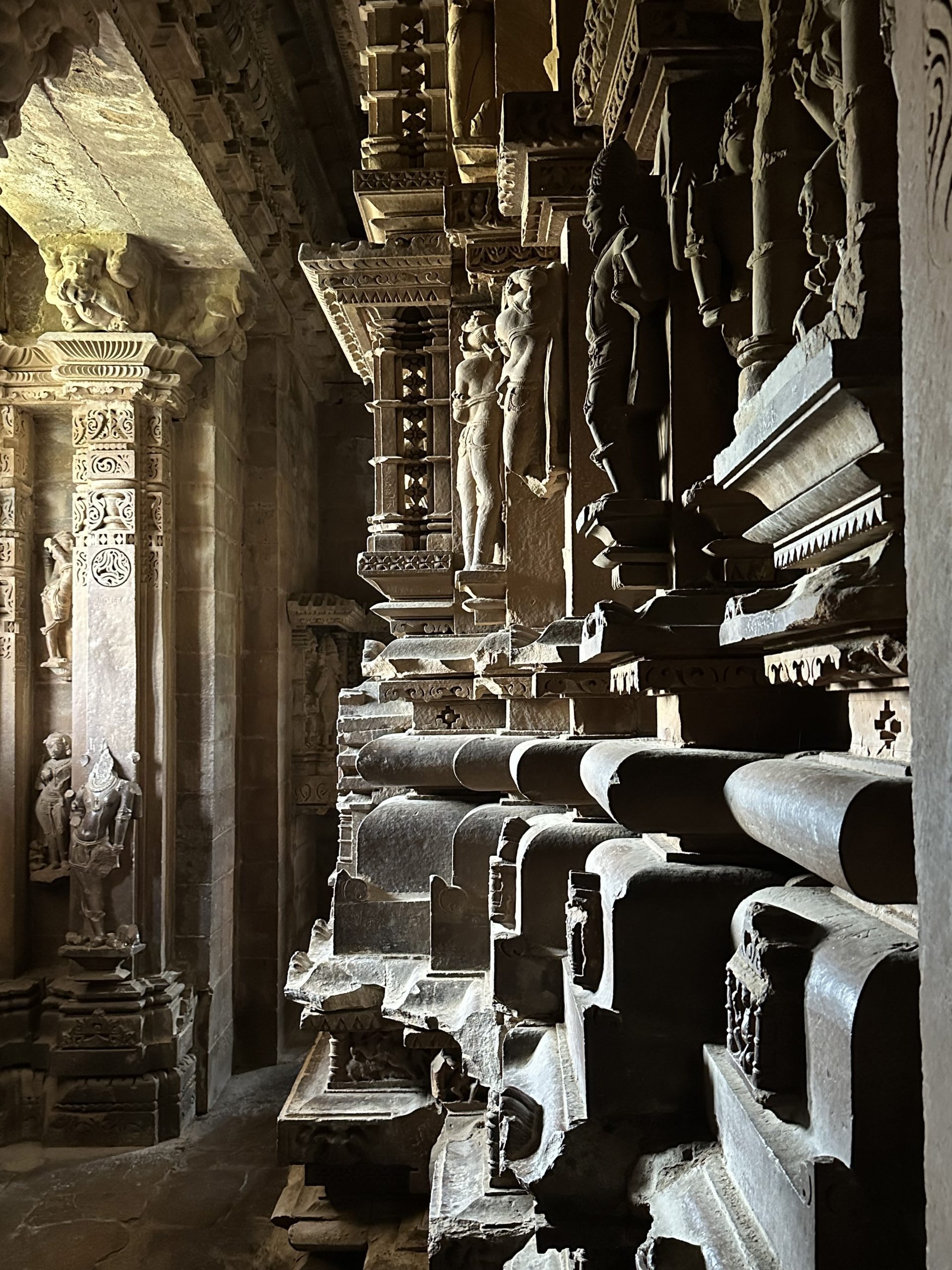
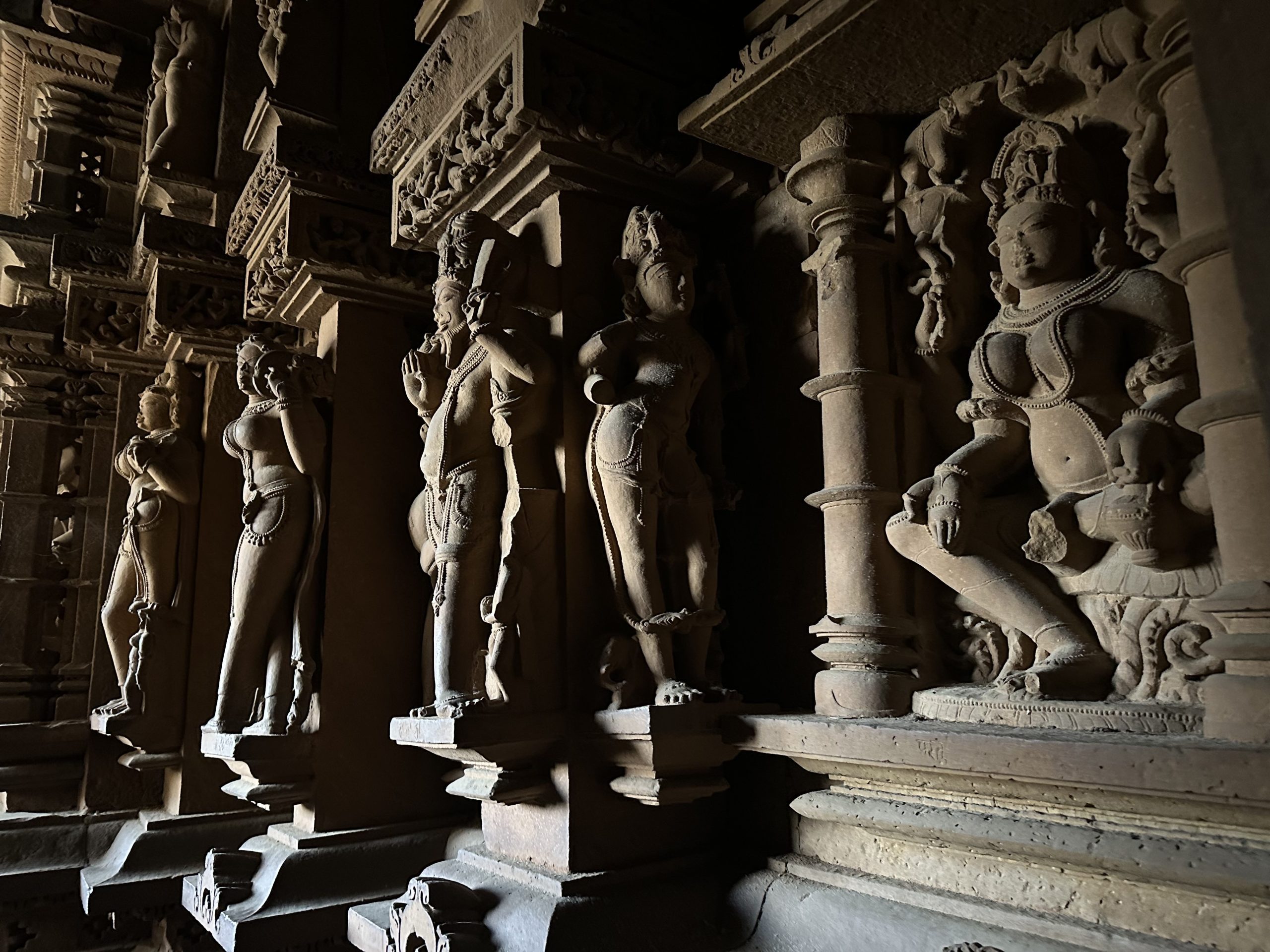
The temples were constructed with blocks of sandstone, relying on engineering rather than cement to hold them together, allowing for precise placement of sculptures. Mortise and tenon joints were used to join adjacent stones, providing stability to the walls and the high-rising shikhara (spire). The statues of Apsaras (celestial nymphs), Vyala (mythical creatures), and deities are carved into the very same sandstone panels that hold these structural joints.
While I was witnessing this fabulous architecture and the artistic sandstone carvings, stories were delivered with a tinge of humor from Shyam, the guide I had hired. I knew I had to do some homework. Shyam gave me a couple of books to read before I was to explore the temples by myself the next day. After I made my way back, I downloaded the books and attempted to make sense of what I was experiencing.
My Homework
I was recommended two texts from 10th century authors, originally written in Sanskrit and later translated into English.
The Ratirahasya, (translated in English as “Secrets of Love” also known as the Koka Shastra): Estimated to be written between the 9th and 12th centuries. This is a Sanskrit treatise on love, sex, and eroticism by the poet Kokkoka. It is both a how-to guide for a refined erotic life and a window into medieval India’s blend of restraint, sensuality, and devotional mysticism — vividly illustrated by masterpieces like the Kandariya Mahadeva Temple.
https://ignca.gov.in/Asi_data/43033.pdf – this file is 20MB
The Brahma Purana (Part I, Chapters 1–40): A classic Purāṇa blending cosmology, mythology, genealogy, geography and religious practices. It provides mythological and devotional background for Śaiva temples of the Chandela era
The Tension
The more I read, the more I noticed the tension of these two texts pulling me in opposing directions. On one hand, there was an impulse in me to make sense of something… the sculptures, the Chandela era and the texts, as a way to steady myself against the mystery of these 1000-year-old temples before me.
The Ratirahasya felt the most familiar because it attempted to make sense of attraction, interaction, timing, compatibility and human behavior. It tries to classify people and systematize relationships as something that can be studied, refined and taught. There was something reassuring about that approach because I recognized myself in it immediately.
I do something similar in my own life. I notice patterns quickly. I pay attention to tone, behavior, inconsistency and chemistry. My mind naturally tries to read between the lines to see what is happening underneath an interaction, especially in relationships. Sometimes my intuition is right. Sometimes it isn’t. But there is always a part of me trying to understand what is happening beneath the surface before the uncertainty starts getting to me.
Then I would return to the Brahma Purana and feel the complete opposite. The stories moved through connection, separation, devotion, and conflict. Nothing stayed settled for long, and the text itself did not seem interested to fully resolve anything.
The more I sat with it, the more uncomfortable I became because the Brahma Purana pushed directly against my desire for clarity. While the Ratirahasya approached human interaction as something to be observed, understood and refined. The Brahma Purana seemed to accept that human experience itself is inherently unstable, shifting and impossible to fully hold onto. One text pulled me toward interpretation; the other confronted me with movement and the inability to permanently land anywhere.
The Mirror
Somewhere in the middle of reading these texts while walking through the temples, something started becoming obvious to me. I was trying to do the same thing with the Kandariya Mahadeva Temple itself. I was trying to make sense of it all in a complete way. The erotic carvings, the architecture, the stories, the symbolism, and the Chandela dynasty. I could feel myself trying to pull all of it together into one coherent understanding, as if understanding it completely would somehow steady me. But the more I searched the internet and tried to force everything into resolution, the more I noticed the tension becoming self-inflicted. Because there are no answers.
Somewhere along the way, my attention slowly shifted away from the temples themselves. I became less interested in solving the carvings, the texts or the Chandela era, and more aware of what was happening in me while trying to understand them. That was the part I did not expect to encounter in Khajuraho. Not answers, but the constant impulse in myself to keep reaching for them.
And somewhere between those two texts — one attempting to understand human interaction and the other quietly refusing to resolve human experience — I recognized myself.
The Realization
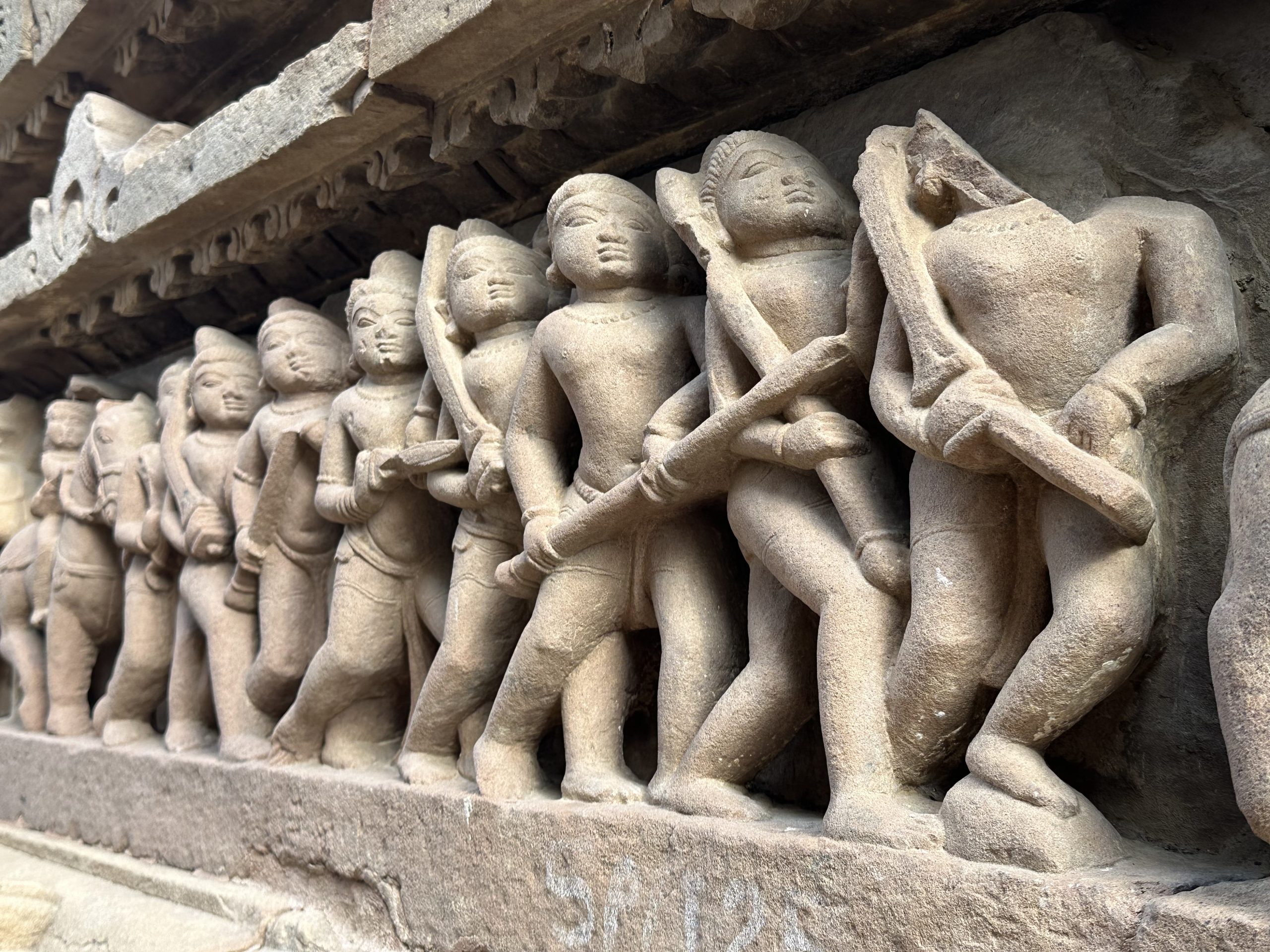
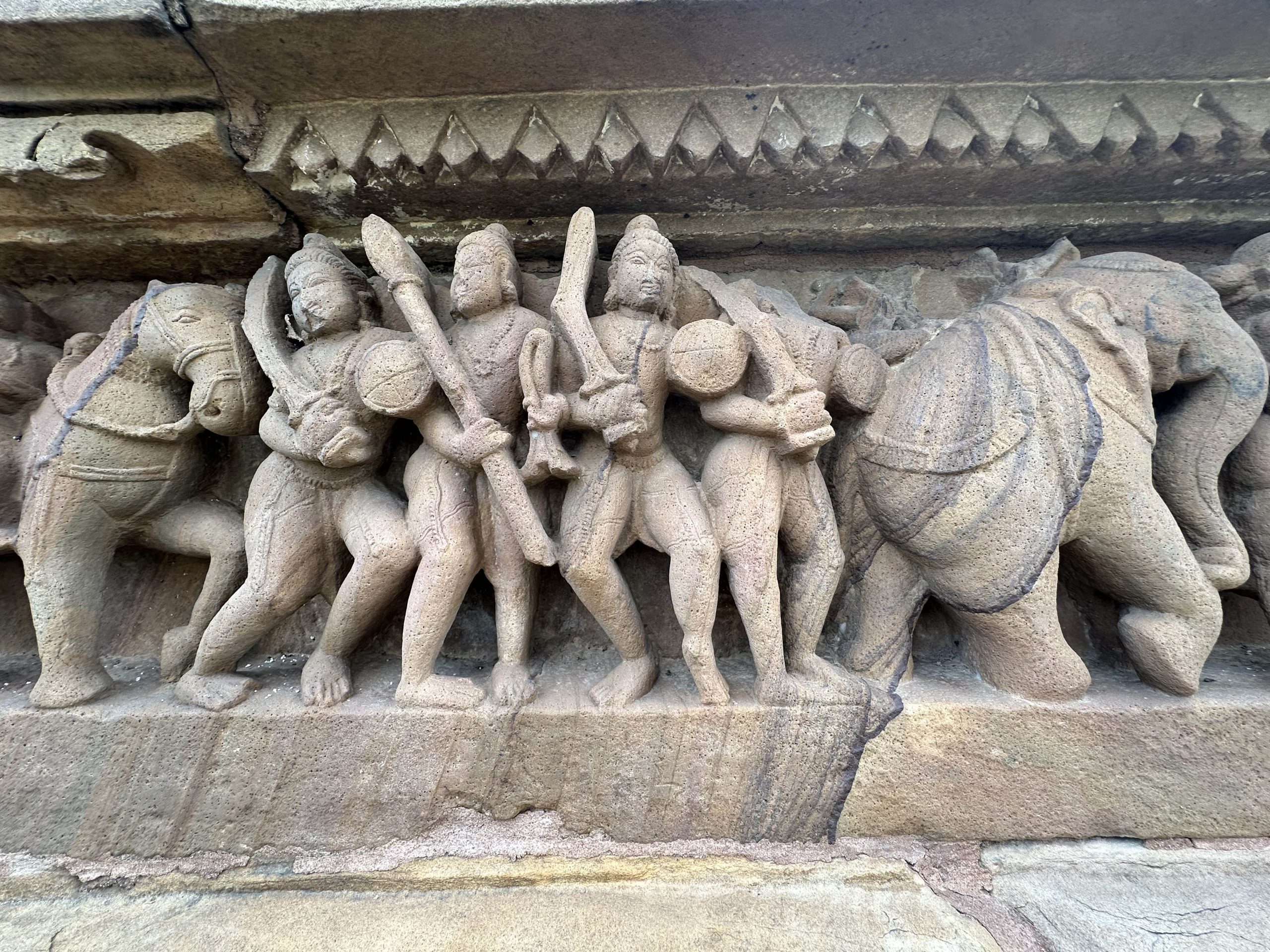
Standing in those temples for those few days was an exercise in mental masturbation that turned into exhaustion. I was reading these ancient texts, listened to Shyam lecture on the Chandela dynasty, and staring at the carvings that refused to stay in one category—moving from sexuality to violence to humor, all without warning.
And I caught myself doing it again.
I was desperately trying to organize the chaos, forcing a thousand years of history into a neat, coherent box just so my brain could finally “land” somewhere and relax. I wanted to understand it completely, not only because I was curious, but because I was uncomfortable in the mystery. I wanted to use “knowledge” to sooth my uncertainty.
This eventually stopped being about the temples or the 9th century. It became a glaring view of my own neurosis—my relentless need to grasp for understanding when I’m standing in the middle of a 1000 year old mystery that no matter how hard we try, cannot be completely solved.
The Resolution
Before I even arrived in Khajuraho, India was already working on me. I knew it would provide a mirrored reflection of myself, sometimes an overused spiritual cliché people throw around after a few emotional breakthroughs. Between the overcrowding, the incessant noise, the pollution, and the total loss of personal space, I saw the truth: India wasn’t creating something new in me; it was exposing what was already there.
I honestly thought I was entering this trip calm, adaptable, and open-minded. Instead, I found myself overstimulated, impatient, and frustrated. What I normally used to steady myself—structure, order, routine, predictability—disappeared immediately. There was no controlling the pace of the traffic or the noise or the scammers. Any resemblance of control I thought I had was a complete illusion.
What started becoming uncomfortable was not India itself, but seeing how much of my internal stability depended on feeling I had some control over the environment. Without that control, how could I possibly be an experienced traveler?
That realization followed me all the way to the Kandariya Mahadeva Temple. Standing there, listening to Shyam explain the Chandela dynasty while wandering through carvings that moved endlessly between intimacy and conflict, I felt myself falling into the same desperate cycle. I was trying to organize the carvings to land somewhere clear in my thinking. I was trying to make them coherent enough that I could finally relax into “understanding” them.
But the harder I tried to find a resolution, the more elusive it became. I wasn’t seeking knowledge; I was seeking some kind of sedative for myself. I wanted to use “meaning” to quiet the anxiety of the chaos of life being unresolved. It’s the same thing I do in my relationships and with myself—the impulse to over-interpret and weave structures together just to appease my own discomfort with the unknown.
This trip wasn’t about “seeing India” or admiring 9th-century architecture. It was a confrontation with myself — a clearer view of my need to keep reaching for understanding just to sometimes avoid the reality of the great mystery of life. I never found the lesson in the carvings, but I saw what shows up in me when the illusion of any certainty disappears and I’m forced to exist inside the chaos of life.





Carol Karpson Schoenleber
The most important kind of education – whom do you recognize and discover in your explorations as you travel? Who actually IS the observer? We are made up of many parts, both physical and emotional, just like the sculptures in the temple. What self-knowledge is brought out of us by our interactions with brilliant, ancient physical entities and their spirits?