The SIM Card Fiasco
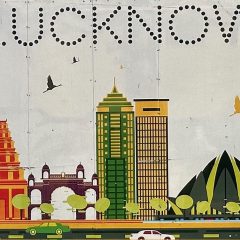
Getting a SIM card for my phone while traveling had never been this difficult. Then again, I was in Lucknow, India where there are not many foreigners. In many countries they sell SIM cards at the local 7-Eleven stores. A quick scan of a passport, and a few minutes later you are done. Not this time… in India, a society of mistrust, as I am finding peace without control.
I quickly discovered that my travel eSIM didn’t cut it. I could not use the taxi application, order food delivery, or book train and bus tickets. India now wanted me to have an official Indian phone number connected to a government-approved application process. So I gathered all the paperwork I thought I would need: my passport, visa pre-approval letter, visa stamp, my host’s address and host’s telephone number.
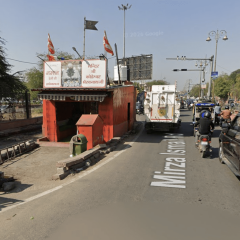
I first went to a small phone shop staffed by one young man who could not complete the process himself, so he called a friend over to help. We worked through the application together and I handed over some money hesitantly. I was told activation would take some time. Nothing happened. The next day I returned and, to his credit, he refunded my money exactly as promised.
I then tried a larger provider with a bigger storefront and more employees. There I met another young man who was incredibly kind and patient. We went through the entire process again, filling out forms, taking photographs, uploading documents, and waiting for approval. Three times the application was denied. Eventually I learned the reason: my visa approval letter was a black and white copy and didn’t display the original blue header. After more than two hours, I had to leave the store, find a copy shop, and make a color copy of the document.

By this point I was no longer simply frustrated. I was trying to understand what kind of system required this level of verification over the color of a page header. The young man helping me explained it simply. “India is a mistrust society,” he said. “The government is involved in the application process.”
The phrase stayed with me, “…mistrust society”
I returned again the following morning. This time the application was approved, though another problem immediately emerged. India only issues physical SIM cards while my American phone only accepted eSIMs. The young man found a workaround by temporarily activating the SIM card on his own phone so it could later be transferred to mine. But first the SIM needed to remain active for twenty-four hours before it became eligible for transfer.
What should have been a simple errand had unfolded into a four-day saga of paperwork, approvals, delays, and improvisation. Eventually it worked.
Yet what stayed with me afterward was not only the bureaucracy and red tape, but the strange coexistence of institutional mistrust and personal kindness. The system felt rigid, suspicious, and exhausting, while the people inside it were patient, resourceful, and deeply helpful. I wanted to leave the young man a positive review online while criticizing the process itself, but I realized the two could not easily be separated.
That tension between institutional mistrust and personal kindness lingered with me because it felt larger than just my SIM card application. I had arrived with all the correct paperwork. I followed the instructions carefully. I behaved patiently. Yet the outcome still unfolded according to conditions far larger and more complicated than my preparation.
I am realizing that much of life works this way.
The Architecture of Mistrust

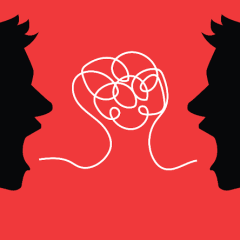
What struck me afterward was how much energy a mistrust society must devote toward verification, procedure, and control. The SIM card itself was not really the point. The point was the assumption underneath the process. The system was not designed for ease or openness. It was designed around the possibility of deception. Every photocopy, approval, signature, and layer of oversight reflected a deeper cultural reality in which trust could not simply be assumed. The systems evolved defensively.
At first it was easy for me to see this as inefficiency and become frustrated by the bureaucracy and procedural rigidity. But the more I sat with the experience, the more I realized that mistrust develops over time inside societies where institutions have not always proven reliable, where corruption exists, where scamming and identity fraud are common, and where large systems are difficult to manage fairly across massive populations. In these environments, people learn that personal relationships are often more dependable than the formal bureaucratic structures.
As bureaucracies expand defensively in response to fraud, legal risk, and public pressure, rules multiply, verifications expand, and oversight grows heavier under the weight of procedures and paperwork. The system gradually organizes itself around preventing deception rather than creating ease. The result can feel exhausting, especially to someone arriving from a culture that expects efficiency and predictability from institutions.
Mistrust also reshapes how people navigate these systems when they become emotionally or structurally unreliable. As people become more cautious and skeptical, intermediaries emerge to help navigate the complexity. Brokers, agents, fixers, consultants, compliance departments, escrow services, insurance systems, identity verification systems, and even decentralized financial systems born from institutional skepticism. Entire industries organize themselves around the management of mistrust itself.
Personal relationships then become the infrastructure people work within. The kind young man helping me at the phone store mattered more than the system itself. The system alone could not solve the problem. It was his patience, creativity, diligence and willingness to personally help me navigate the process that ultimately made the situation work. That pattern exists far beyond SIM cards. In many parts of the world, life depends less on the smooth functioning of institutions and more on relationship networks, favors, trust, flexibility, and human improvisation.
The more I travel, the less interested I’ve become in understanding or coming up with simplistic judgments about which societies function “better.” Every culture creates its own tradeoffs, preserving certain human strengths while sacrificing others. Highly bureaucratically organized societies can create extraordinary efficiency while leaving many people lonely, emotionally detached and isolated from the systems that govern their lives. More relational societies may feel chaotic and bureaucratically frustrating while preserving forms of human flexibility, interdependence, and emotional responsiveness that highly institutional cultures have lost.
What unsettled me most, however, was not India itself. It was what the experience revealed in me.
I realized that my frustration was not only about paperwork, delays, or bureaucracy. Beneath the irritation was something deeper: my own relationship with contingency and the fragile nature of control. I arrive at institutions (phone, bank, immigration) believing that if I brought the correct documents, followed the instructions carefully, and behaved patiently, the process should unfold rationally. When it did not, my frustration grew quickly.
Travel has a way of exposing these hidden assumptions. As I reflected recently when trying to parse out Why India? What Chaos Revealed About Myself, the country acts as a mirror. It reveals how much internal stability can unconsciously depend on the belief that the external world should behave according to our expectations. When that expectation breaks down, we experience far more than inconvenience. We experience a deeper truth that we never had any control over the world to begin with.
The Deeper Confrontation
Now that I’ve been exposed to this part of myself, I begin to see this tension everywhere in modern life as a whole. We are surrounded by collective problems that none of us can fully resolve: political polarization, institutional distrust, economic instability, cultural fragmentation, war, corruption, loneliness, environmental anxiety. Social media amplifies outrage continuously and emotional reactivity becomes contagious. Everyone seems capable of identifying what is broken, while far fewer people seem interested in the more difficult psychological question: how do we remain grounded while participating in a world that will never fully resolve itself?
The longer I travel, the more I believe that most of our frustrations aren’t actually about the problem directly in front of us. The SIM card was never only a SIM card. Beneath many of these experiences sits a deeper confrontation with the volatility of life itself.
There are certain realities we face as human beings that will never be fully resolved. Corruption will always exist. Governments and institutions will fall apart and fail. Bureaucracies become rigid and rule heavy. People will be emotionally inconsistent. Relationships stay confusing. Contradictions accumulate inside both societies and individuals.
Intellectually, I can wrap my mind around it easily, but emotionally it seems next to impossible.
I think many of us organize our lives around the belief that once conditions become stable, safe, predictable and efficient, then we will finally attain peace and nirvana. We imagine that if we can correctly manage our relationships, finances, governments, routines, or environments, we will eventually gain enough psychological and physical security to protect ourselves from the unpredictable nature of life.
India confronted me with population density, contradictions, noise, human intensity, and procedural confusion, all of which required constant adaptation. But what became visible was not only the external environment. It was my own psychological need to organize the chaos in order to feel stable within it.
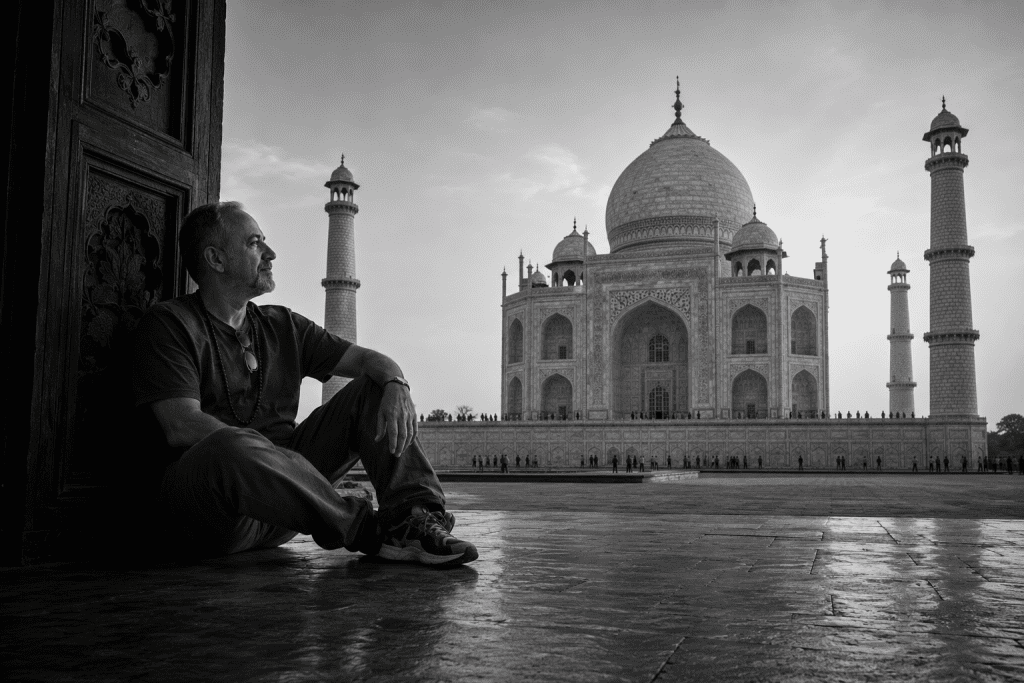
I recently wrestled with this exact internal loop while standing in front of the thousand-year-old structures in Khajuraho: Coherence is in the Chaos, tracing my instinct to organize mystery into neat, safe boxes just to let my brain finally rest. I realized how much internal stability I derived from believing that the world should behave according to some kind of rational societal standard shaped by evolved morals, ethics and human development refined over millennia.
What I was feeling in that phone shop is what sociologists call the shift from institutional trust to a system of generalized skepticism. In Trust and Power, Niklas Luhmann argues that trust is the primary tool we use to reduce life’s complexity so our brains can rest. Without it, everything clogs up. The result is the global bureaucratic exhaustion we see everywhere today—a defensive world trapped in its own machinery.
The deeper challenge is learning how to remain ethically, emotionally, and relationally engaged without specific “outcomes” of personal choice.
The human world can feel maddening at times. Everywhere people are struggling to reform, control, resist, and reshape reality into something more tolerable. I recognize the impulse in myself as well. Part of me still believes that if I think clearly enough, act correctly enough, or understand deeply enough, I might finally arrive at some lasting psychological resolution.

But I am becoming exhausted by the search itself. Exhausted by the constant effort to secure peace, certainty, or freedom through understanding and knowledge. More and more, I find myself wanting something simpler: the ability to act compassionately, remain present, and rest without resistance inside conditions that cannot be fully resolved.
That may be one of the hardest psychological tasks of adulthood.
Because life continues moving through unstable systems, imperfect institutions, fragile relationships, human contradiction, aging bodies, collective anxiety, and unresolved tension. There is no final condition where safety can permanently exist and vulnerability disappears. There is no permanent state of safety and security waiting for us.
We are never going to eliminate the instability, the noise or the breakdowns of our systems. The peace we are looking for cannot be fully secured through conditions alone. It’s the quiet grace of showing up anyway, letting go of outcomes, and learning how to live undivided.