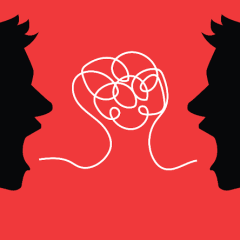
Preface: This essay seems to be a natural progression from the previous two pieces, Coherence is in the Chaos, and A Mistrust World. In Khajuraho, India the Chandela dynasty built temples in an attempt to organize the chaos of the universe into human form. In A Mistrust World, governments built rigid bureaucracies to manage mistrust inside growing social structures. In this essay, the modern individual uses therapeutic language and dating algorithms to manage emotional contingency itself. The final frontier of surrender isn’t in an external system—it is the human heart.
The Desire for Clarity
I have spent much of my adult life trying to become more conscious in relationships. Like many others, I did not grow up with healthy relational models that demonstrated what intimacy could look like when grounded in emotional honesty, compassionate communication, and maturity. I wanted to understand myself better, so I went searching for greater clarity around what healthy intimate and sexual connection should actually feel like.
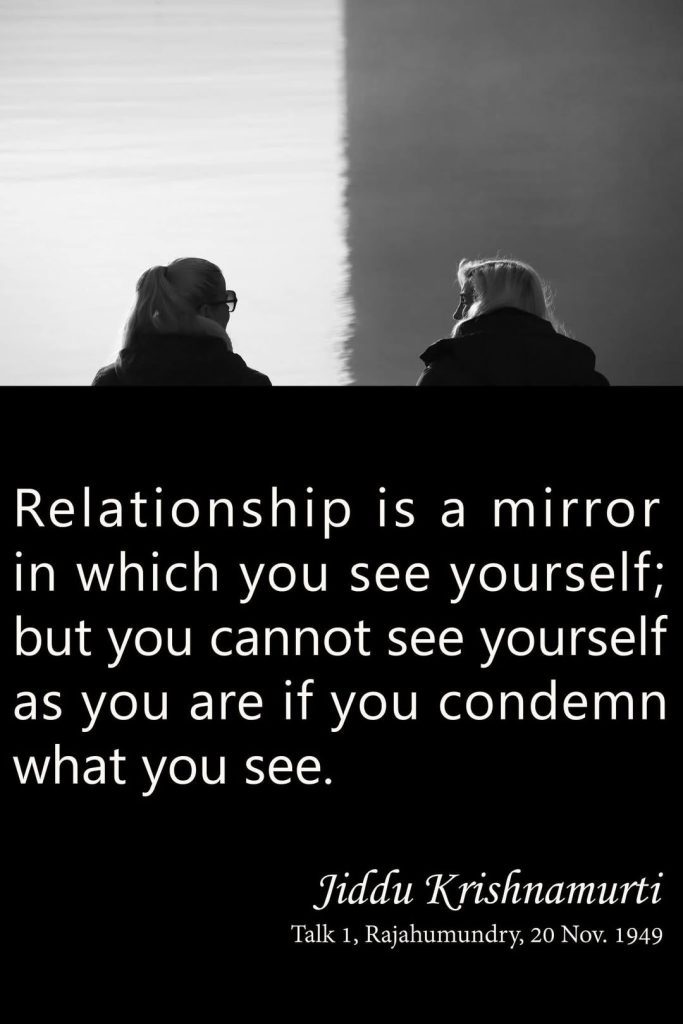
I wanted to know my needs clearly instead of unconsciously projecting them onto others. I wanted to communicate directly, ask for what I wanted, set healthier boundaries, understand my triggers and express myself calmly. In many ways, I believed this was the definition of psychologically and emotional maturity. If two people could communicate openly, remain self-aware, and approach each other empathically – compassionately – sincerely, then surely much of the confusion and suffering surrounding intimacy could be reduced.
And for the most part, I still believe that.
There will always be some unresolved ambiguity inside human relationships. Human beings are simply too complicated, contradictory, emotionally inconsistent for complete mutual understanding. But I still clung to a belief that emotional maturity could reduce unnecessary conflict. I believed self-awareness and honest communication could create enough relational clarity for people to rest more securely inside each other without constantly questioning where they stood.
Lately, however, I have begun questioning whether part of my search for clarity has also been an attempt to manage the risk of my own vulnerability.
Living in Asia has intensified this realization for me in ways I did not expect. Many relational cultures here operate on a baseline entirely different than the highly explicit communication style I was educated in. Emotional communication is often indirect, softened, denied, and filtered through harmony preservation, face-saving, and relational balancing. Rejection is communicated through a shift in action rather than explicit language. Ambivalence lingers unexpressed and unresolved, allowing relationships to remain fluid, undefined, or emotionally difficult to interpret for long stretches of time.
In the beginning, I experienced this as sheer confusion and pure exhaustion. I found myself trapped in a state of hyper-translation, constantly trying to read the invisible emotional landscape around me. I would observe interactions and wonder: Are people being polite while harboring deep frustration underneath? Is this connection genuine, or is it a beautifully performed social dance? Can anyone truly know the difference when emotional truth is entirely indirect?
Navigating this constant, unresolved ambiguity while trying to remain emotionally open is psychologically draining. But the longer I sat with this fatigue, the more uncomfortable another realization became. The problem was not only the culture around me. Part of what I was confronted with existed inside of me.
I began noticing how deeply I relied on emotional clarity to stabilize me inside relationships themselves. Somewhere beneath all my study and practice around psychological frameworks, compassionate communication, and self-awareness, I was carrying a hope: If I could understand relationships deeply enough, communicate clearly enough, and become psychologically aware enough, perhaps intimacy would stop feeling so destabilizing.
But intimacy never fully stops being destabilizing. No amount of relational intelligence removes the fact that another human being remains unknowable.
Time continuously passes and people change. We have our moments where we are completely present, followed by moments of withdraw. We contradict ourselves all the time. We struggle to understand our own shifting emotions, making it more difficult to communicate them clearly to another person. Even healthy, emotionally mature relationships cannot fully eliminate this dichotomy.
Accepting this has been difficult. No matter how much I have learned about psychology or sexuality, I can still feel an instinct in me that wants to be “right thinking”. An ego drive to manage the relational narrative that it leaves little room for the other person to occupy their own messy space. I don’t want emotional chaos, and I still believe deeply in emotional honesty, clear communication, and reducing unnecessary confusion wherever possible. But I am finally seeing the dividing line between reducing avoidable confusion and trying to eliminate vulnerability itself. Reducing ambiguity is healthy. Eliminating the risk of vulnerability is impossible.
The Instability of Modern Relational Structures
Systems of Emotional Control
The realization that my search for clarity had become a mechanism for risk management connects directly to the broader human impulses I have already been wrestling with. Whether through the moral architecture of ancient temple sculptures or the rigid processes of modern bureaucracies, we continuously search for frameworks to reduce existential ambiguity enough for our nervous systems to rest.
Now I am beginning to see modern relationship and intimacy through a similar lens.
Technology, dating applications, social media, psycho-babble vocabulary, communication frameworks, and modern relationship culture itself have increasingly become systems attempting to manage intimacy. Beneath many of these systems sits the hope that if we can identify relational risks early enough, screening out incompatibility quickly enough, and understand ourselves psychologically enough, we might finally protect ourselves from the instability that love inevitably carries.

But intimacy keeps refusing to cooperate with this theory. In fact, the more our relationships become organized around emotional self-protection, the more exhausted we become.
Socializing, dating and meeting new people feels less like a curious exploration of other human being and more like a high-stakes emotional risk assessment. Everyone arrives at the table carrying a checklist of potential red flags, compatibility concerns, attachment issues, communication standards, and exit strategies. It’s easy to understand why. The modern relational world can feel psychologically brutal. Ghosting, disposable attention, performative intimacy, and endless optionality, have eroded trust and replaced it with hypervigilance.
The deeper truth is that many of us are relationally exhausted long before intimacy even begins. We are drained by workplaces that demand emotional performance, fragmented digital attention, economic anxiety, and the constant psychological vigilance required just to navigate modern life. Under these conditions, intimacy feels less like a sanctuary and begins to feel like another demanding, complex system we have to actively manage. We are constantly being asked to evaluate what is real, what is trustworthy, what is manipulative, and what carries hidden risk. The nervous system rarely fully relaxes anymore.
I do not want to fall into the easy temptation of blaming technology or modernity. Because there are tradeoffs in every era and system. The older relational systems carried immense structural suffering—rigid gender roles, religious coercion, arranged marriages, and relationships maintained by socioeconomic obligation rather than genuine choice. Modernity granted us incredible freedom, autonomy, and self-expression. But by weakening those traditional stabilizing structures, it also left us to tolerate relational ambivalence entirely on our own.
What emerged was not necessarily deeper intimacy, but a culture of emotional individualism paired with profound emotional fragility.
The Vulnerability That Remains
The evolution of modern relationships increased freedom, autonomy, mobility, and self-expression. But it also weakened many of the stabilizing structures that once helped people tolerate relational ambivalence. What emerged instead was not necessarily deeper intimacy, but often greater emotional individualism alongside greater emotional fragility. This was the birth of the disposable culture.

Part of me wonders if we are standing at a genuine turning point in relational life itself. Economic independence, self-expression, reproductive technologies, transactional intimacy, and algorithmic matchmaking have changed the foundational assumptions relationships once rested upon. I feel these contemporary tensions inside myself. I can feel the older repressive systems of dependency that demanded obligation over honesty are weakening. Yet, I keep wondering if modern life is slowly eroding the very psychological conditions that allow human beings to tolerate the slow, patient work of building commitment and investing in long-term trust.
Much of our modern relational exhaustion comes from trying to achieve intimacy while simultaneously trying to eliminate betrayal, minimize loss and manage our vulnerability. But vulnerability is not a by-product of intimacy; it is the prerequisite that makes it possible. To love another person is to remain emotionally open and present without guarantees.
This does not mean our desires for safety, reassurance, and connection are misplaced. They are deeply human longings. But we are asking modern relationships to carry an impossible burden. As psychotherapist Esther Perel observes, we now look to a single partner to provide the meaning, wholeness, and transcendence that an entire village and the divine used to offer. When we collapse the scale of the village into the heart of one person, intimacy stops being a sanctuary and becomes a high-stakes arena where we demand insulation from anxiety, loneliness, ambiguity, and the inevitability of rejection altogether.”
At some point, the longing for relational safety can become an attempt to escape the deeper vulnerability that intimacy itself requires. We think we are protecting our hearts, but we are actually just withdrawing from the unpredictable reality of being alive. Avoiding that risk becomes an attempt to escape life itself.
Because no relationship is permanent, reciprocity fluctuates, human consistency is an illusion, attraction is not stable, and love will always be shadowed by the risk of disappointment and grief. No therapeutic framework or algorithm removes this.
That is the deeper exhaustion I have been confronting all along. It isn’t relational fatigue or cultural frustration, but the tiring human desire for relational consistency and certainty in a space where certainty cannot exist.
I still value honesty, and I still believe emotionally mature communication matters enormously. But more and more, I am beginning to see that peace in relationships does not come from eliminating ambiguity altogether.
It comes from learning how to remain open anyway.
It means learning how to stay psychologically present without a contract guaranteeing a return on your emotional investment. It means remaining compassionate even when the other person is disappointed in us, withdrawing from us, or temporarily unable to meet us in the ways we hoped.
To love another human being is to accept that no relationship can fully protect us from uncertainty, disappointment, change, or grief—and to step into the space anyway, trusting not that the other person will never leave, but that our own hearts are resilient enough to survive the mystery of them.
That may be the hardest form of surrender human beings are ever asked to practice.