
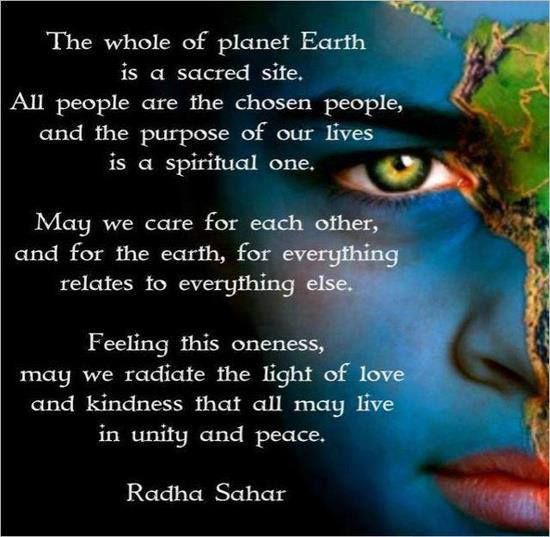
For years, a lot of my writing has been a search for meaning and understanding. I have explored the systems that shape our lives, the psychology behind our relationships, the philosophies that help us make sense of suffering, and the cultural patterns that influence how we coexist together. That search has brought me insight, acceptance and, at times, peace. Today I write about the human connections I made in India
But lately, I have noticed something different wanting to come out of me.
I find myself less interested in only understanding and explaining life because I have spent a good part of my life doing that. It has served me well, and I do not want to abandon it completely. The way my mind searches for understanding has helped me cultivate compassion, appreciation, knowledge of myself, and of the people and the world around me.
But lately I have noticed a shift. I am still interested in understanding life, but I am becoming more aware of the moments happening right in front of me. The conversations over coffee, the meals shared with strangers, the stories people trust me enough to share, and the unexpected encounters that remind me why human connection matters.
As I reflect on my travels through India, I realize I was given many opportunities to practice this. To slow down, listen, share conversations, and experience the people I met along the way. I arrived expecting to be fascinated by history, religion, architecture, and culture. And I was. Yet when I think back on my journey through India, it is not the UNESCO monuments that return most often to memory.
It is the people I met along the way. A chat over coffee. A shared meal. A stranger who invited me into their home. A Hindu priest whose life became more interesting than the rituals he was explaining to me and a group of strangers. Chance encounters whose generosity lingered long after I had forgotten many of the details of the places where we met.
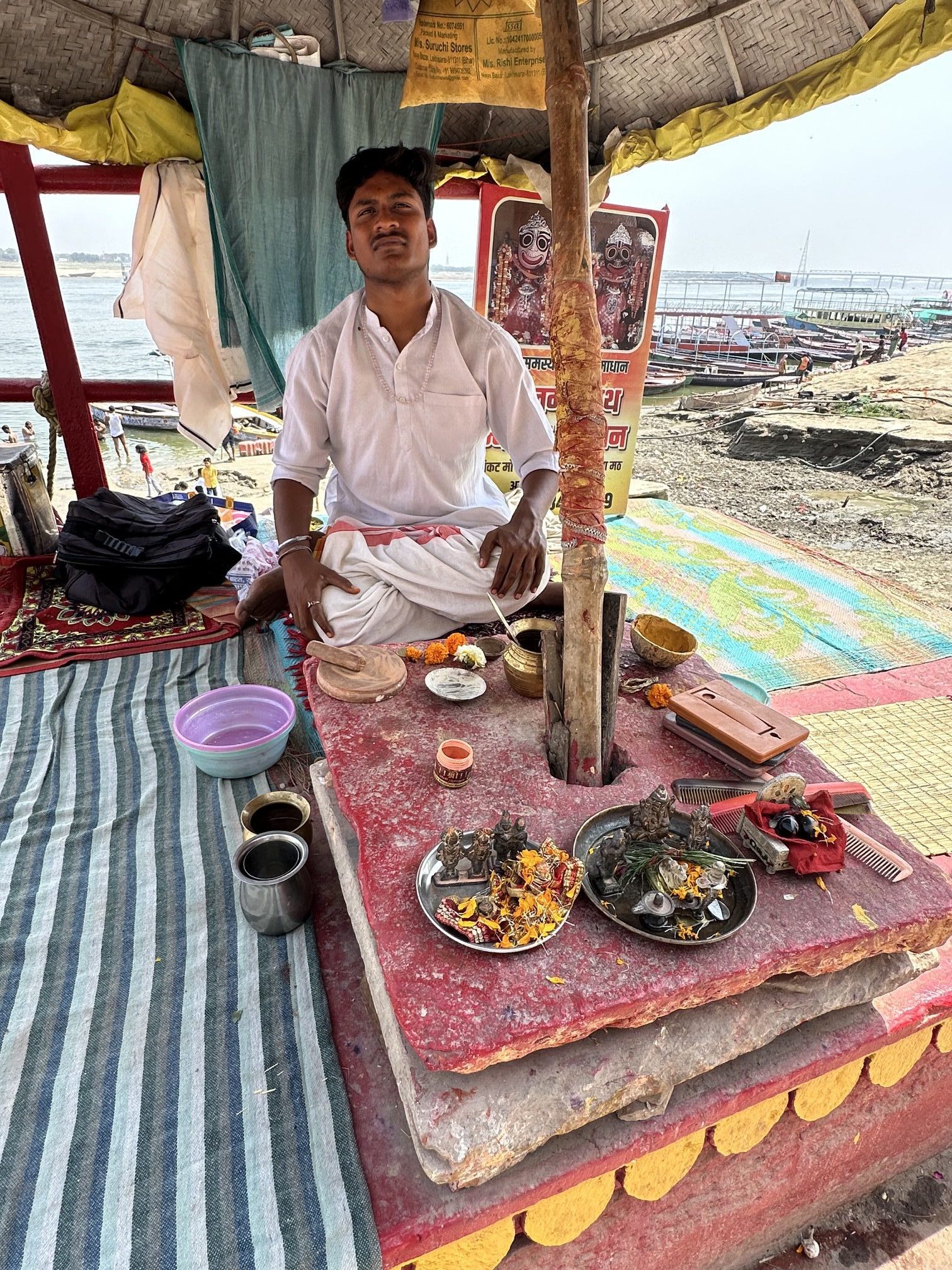
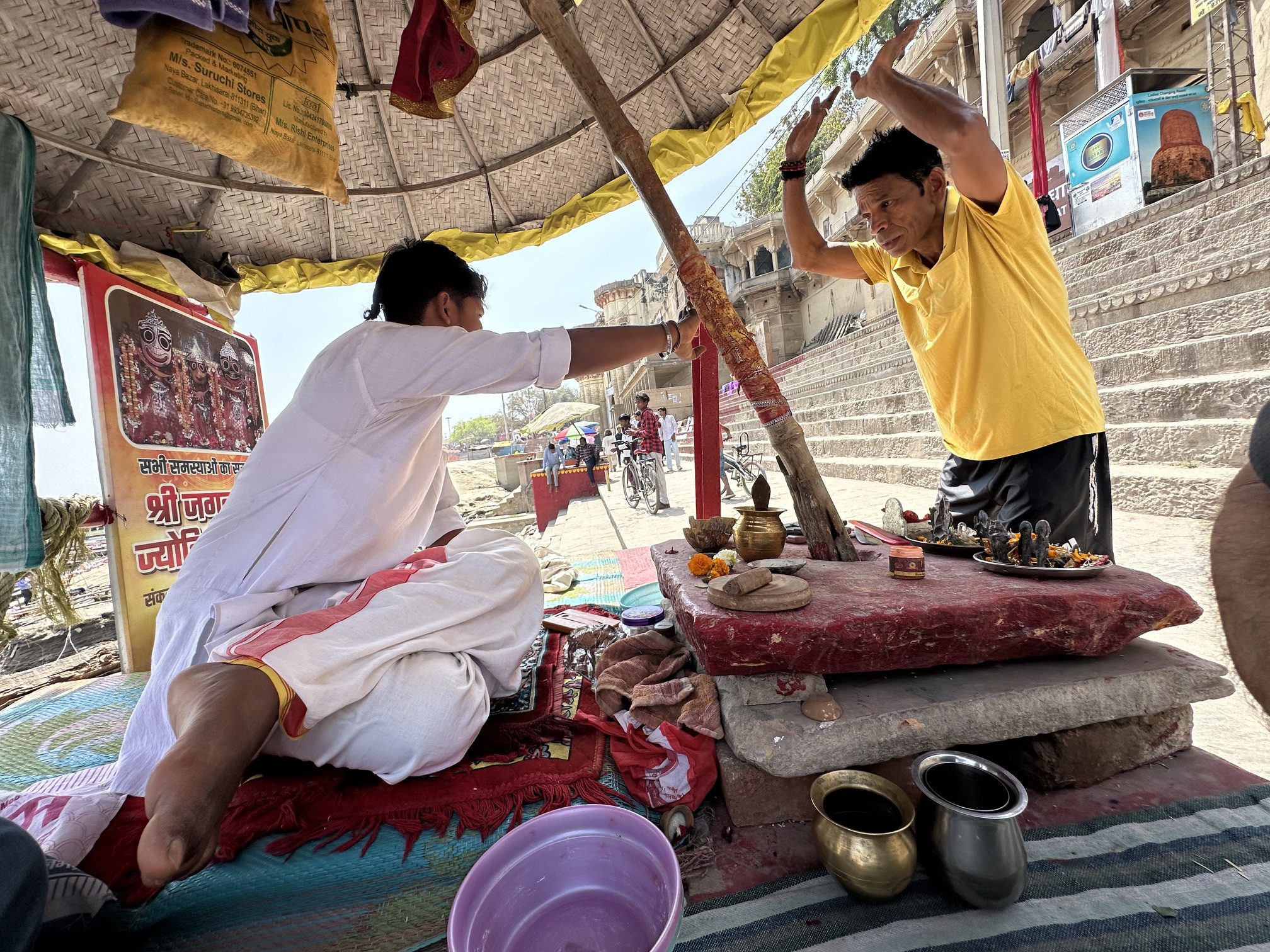
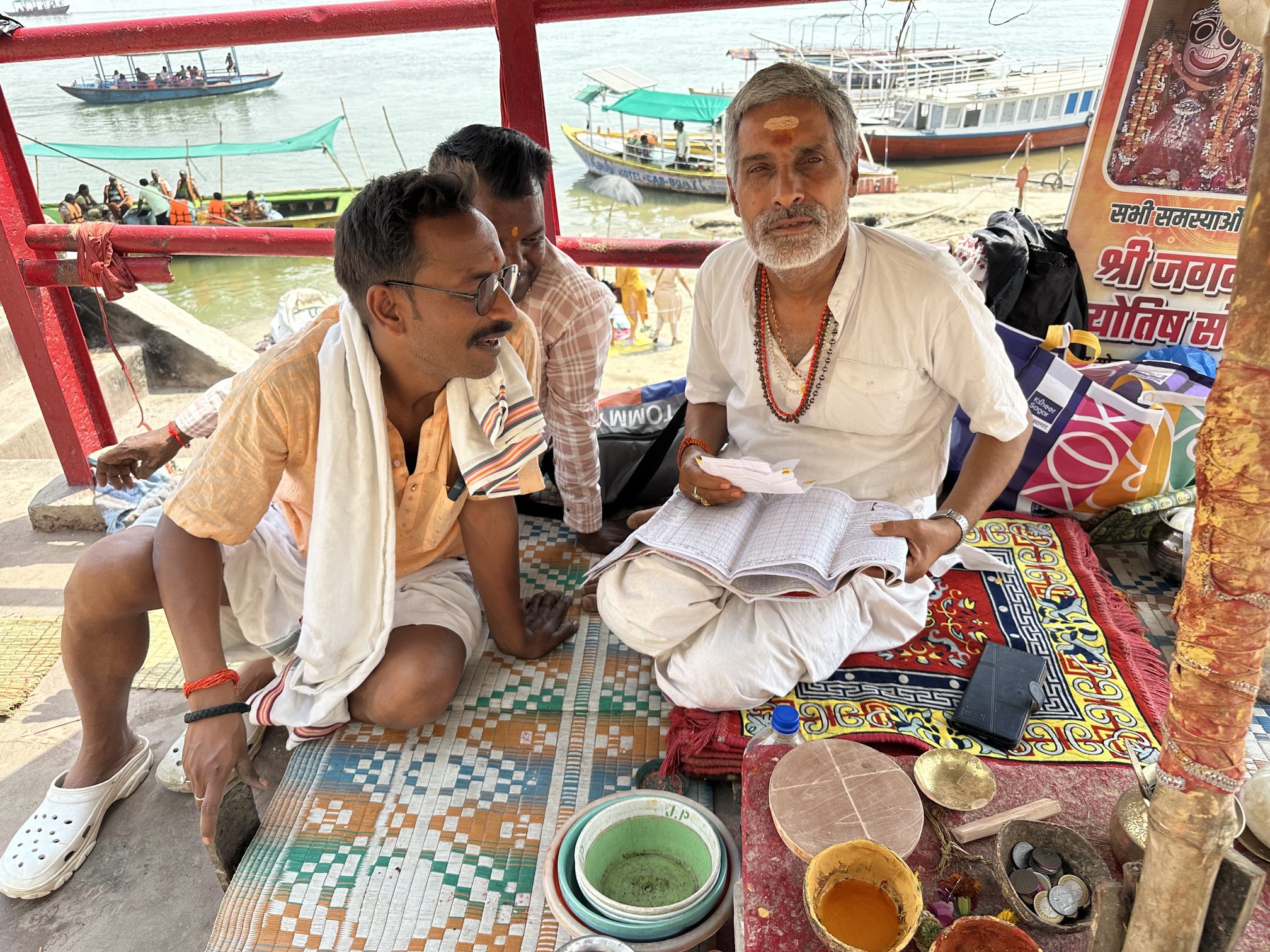
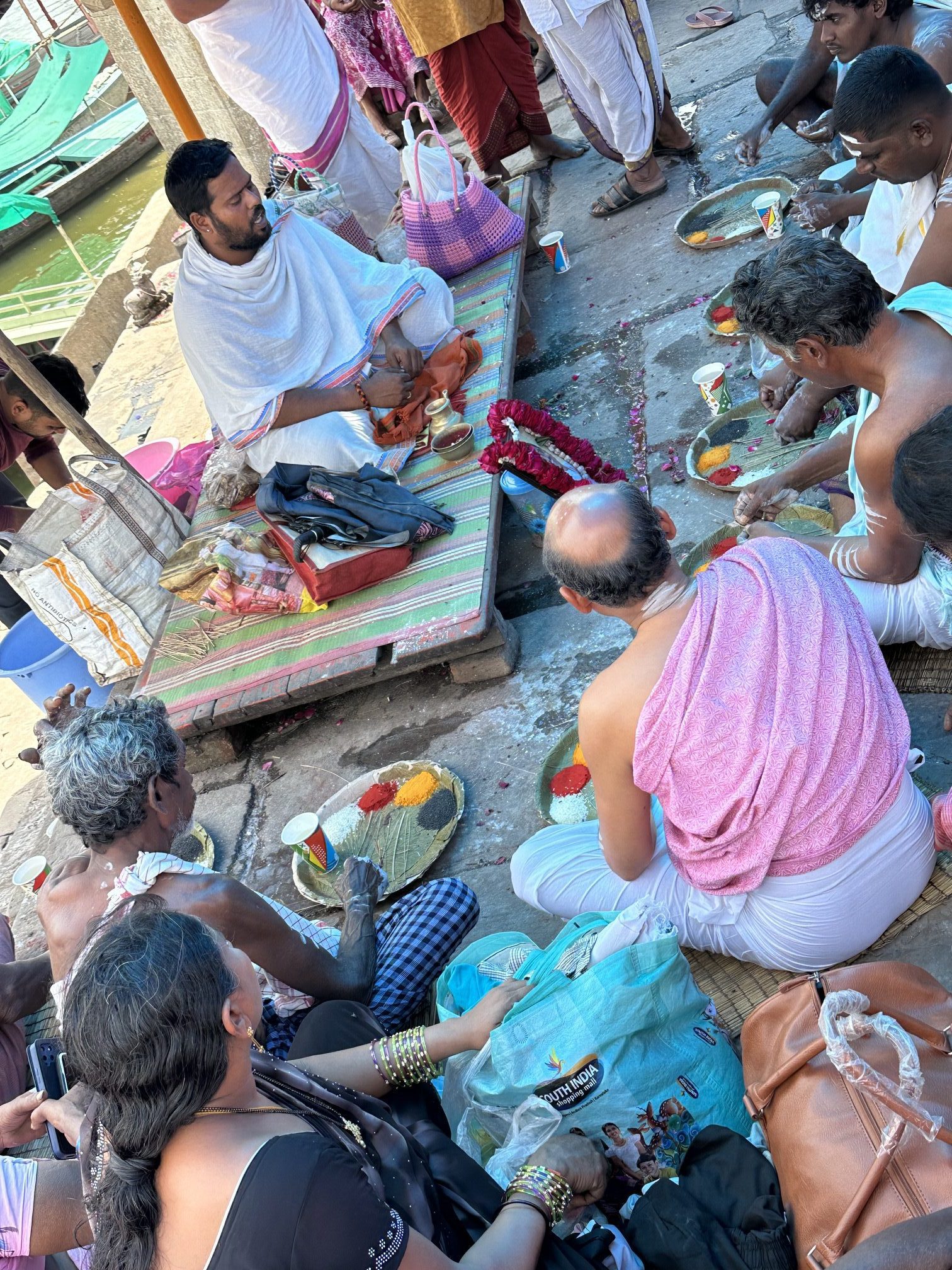
These are the memories that nourish me in a way that cannot fully be understood or explained away. India handed me experiences with people that touched my heart, and again and again, the relationships became more interesting than any structure, system, or theory.
That does not mean the understanding disappeared. Sometimes understanding was exactly what allowed me to appreciate the person sitting in front of me. The history of a building, the traditions of a family, the pressures of a culture, or the stories people carried helped me see more deeply into their lives.
But the understanding was no longer the destination, it becomes the bridge toward compassion and intimacy. A willingness to lean into a conversation, to see another human being a little more clearly, and hopefully recognizing something of myself reflected back. Travel is not only the discovery of new landscapes. Travel becomes the discovery of new possibilities for human connection.
So let’s get started.
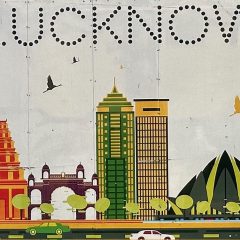
Lucknow, India
The Beauty of an Open Heart
Lucknow was my first stop in India to visit my old friend Vibha, whom I had traveled with back in 2018. Since I last saw her, her life had taken a remarkable turn. Her parents had passed away and she had devoted herself to TaraSri NGO, an organization run entirely by volunteers that mentors about ninety girls in the small village of Satrikh, where the literacy rate among women is around fifty percent. I wanted to see the work she was doing, reconnect with my friend, and explore whether this was something I might want to become involved with myself.
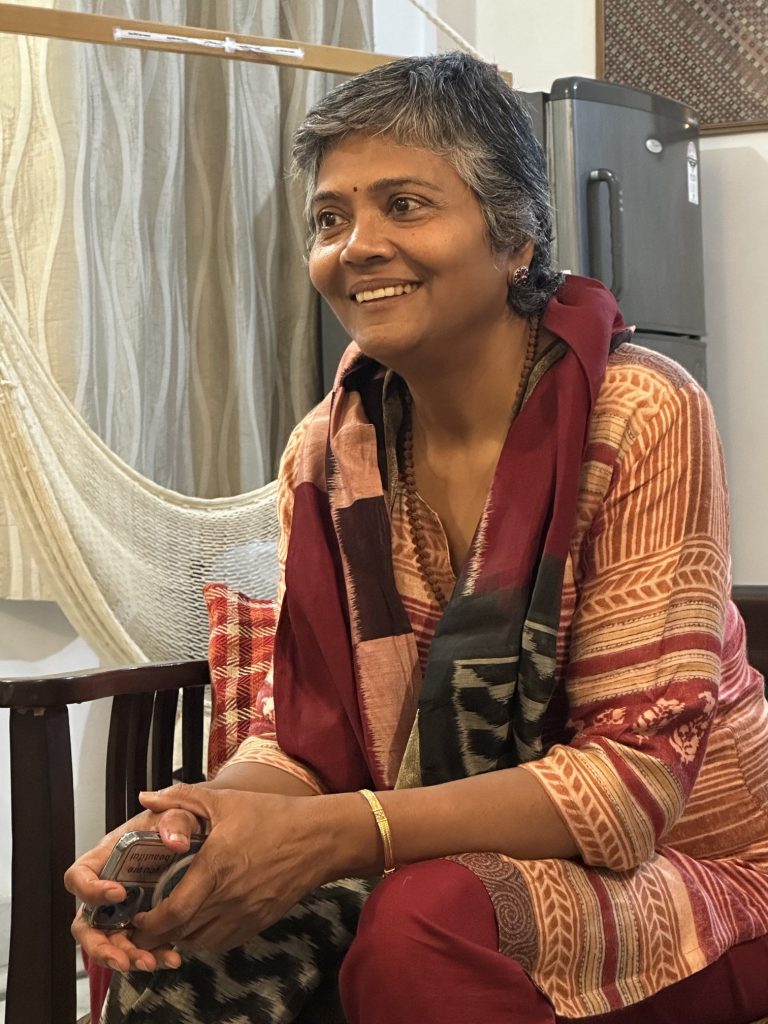
Vibha welcomed me completely into her world. Not just as a visitor standing on the outside of her life, but into her everyday life. I joined her for personal errands, NGO meetings, wedding celebrations, and organizational meetings with the volunteers who were also dedicating their time and energy to these young women. It was wonderful to reconnect with Vibha and be introduced to so many new people who were giving themselves to this work. During my time there, I met Jane, whose name I will keep anonymous.
Jane is in her mid-thirties and completing an internship with Vibha as part of her PhD studies in social work. She would be working with the girls in the village, helping them understand their self-worth and educate them on emotional intelligence. Jane struck me immediately, but what made her even more beautiful was her openness and willingness to share the story of her life. That kind of openness is something I am drawn to and have come to appreciate deeply because it is not something everyone feels safe enough to offer up to a stranger.
Jane told me how she was close to finishing her PhD in engineering when she was diagnosed with cancer. Everything in her life changed. She stepped away from school to focus on caring for her health, and with the support of her family, especially her sisters and father, she made her way through treatment. After overcoming that challenge and being cancer free, she made the courageous decision to begin again, this time pursuing a PhD in social work and dedicating herself to helping other women understand their own worth.
Her story moved me. Relationship heartbreak, a brush with death, the humility of needing to receive care, and then choosing to turn those experiences into a life of service. I found myself sitting across from someone whose beauty was much deeper than anything that was visible through my eyes.
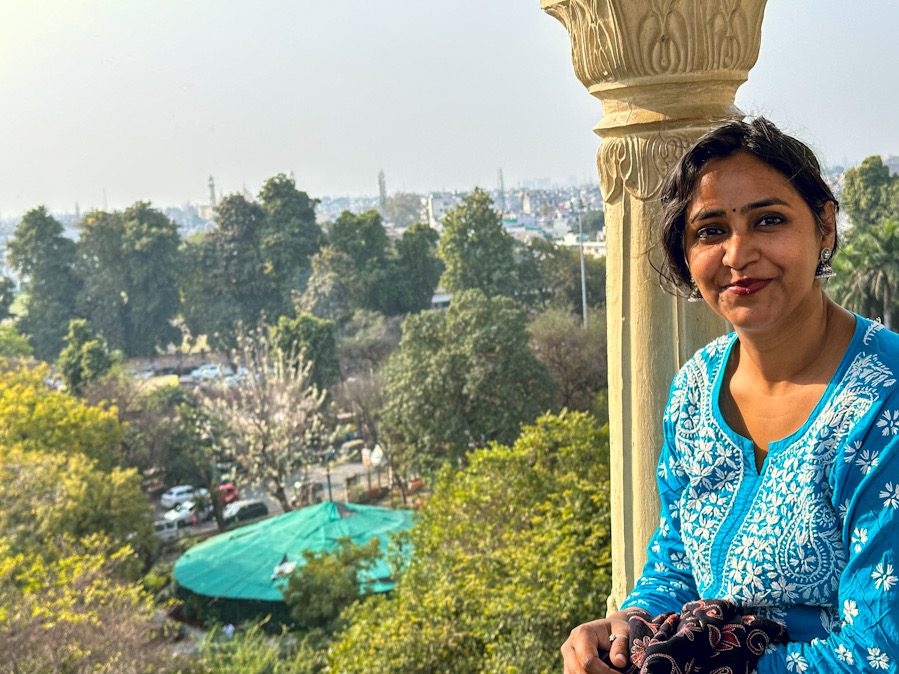
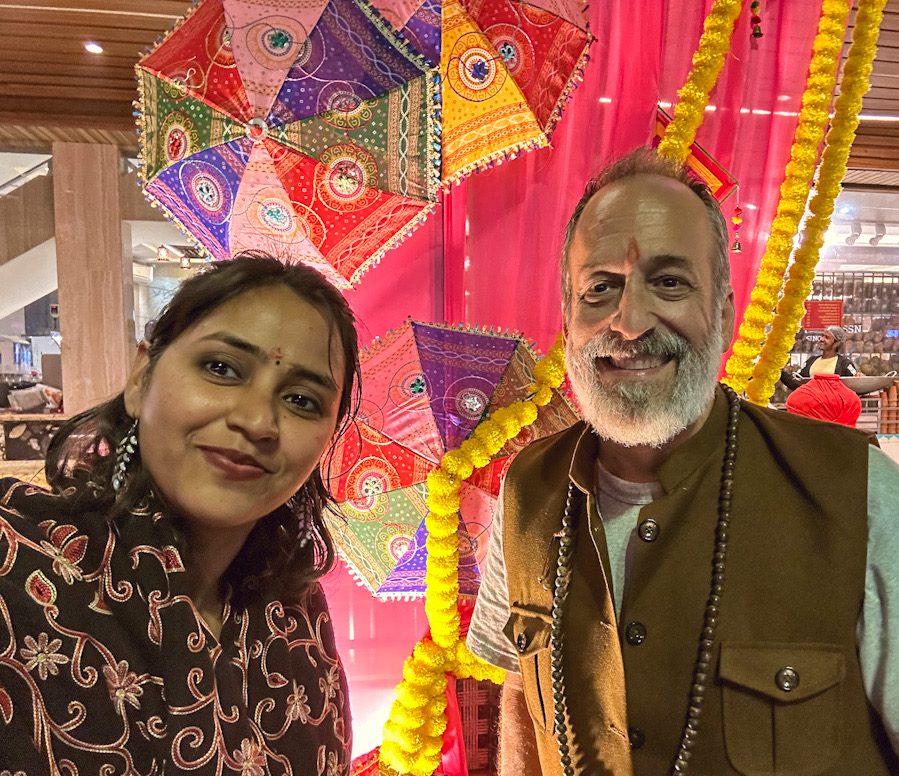
There is a philosophy of hospitality in India that says, “Guests are God.” I felt the truth of that many times during my travels, and Jane embodied it when she offered to spend the day showing me around Lucknow. I was grateful for her generosity, and honestly, I had butterflies in my belly like a little kid excited to spend time with this beautiful human being.
Being with Jane became one of the highlights of my time in Lucknow because of her willingness to meet me in conversation. She answered my endless questions about herself, her family, and Indian culture. Every moment I spent with her, I felt like I fell a little more in love with her, myself, and the world.
She took me through Bara Imambara, with its incredible architecture and the Bhool Bhulaiya labyrinth hidden within its walls. The history of the building touched me because it was not only a story of architecture, but a story of compassion. Bara Imambara was commissioned in 1784 by Nawab Asaf-ud-Daula during the devastating Chalisa famine as a way to provide work, income, food, and dignity to people who were suffering. Even people from noble families who had fallen on difficult times were given an opportunity to earn wages without losing their sense of dignity.
Knowing that story changed how I experienced the building and some of myself. This is where understanding and experience cross over. The history was not simply information about a monument anymore. Standing there with Jane, it became alive. The compassion built into those walls felt connected to the compassion I was experiencing in the woman standing beside me – both architectures built to preserve human dignity.
Jane’s own life carried a similar thread. She had been cared for by her family during her illness, and now she was dedicating herself to caring for others. Somehow, the building and the person became connected in my heart.
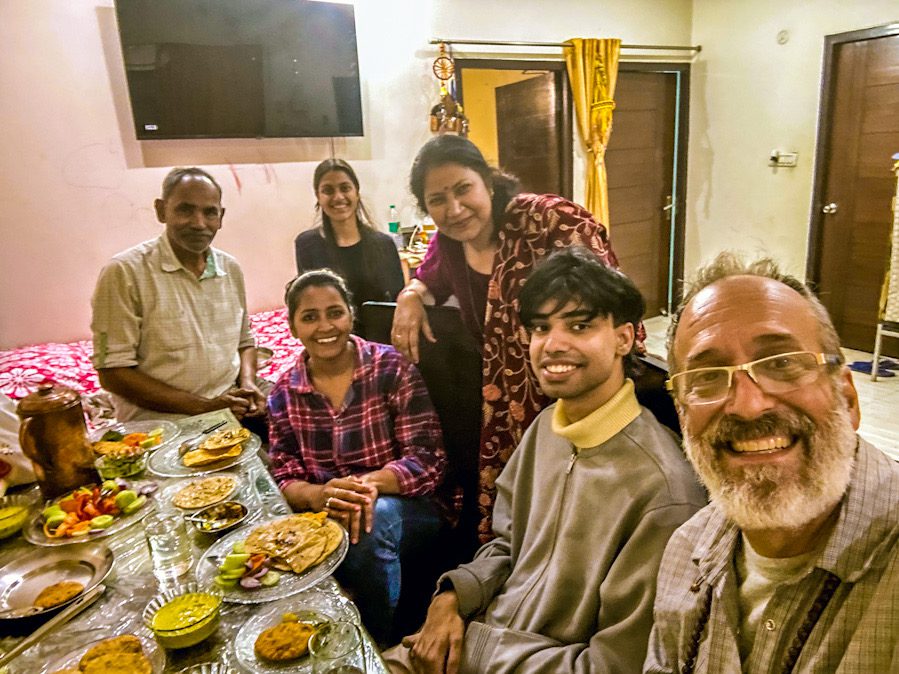
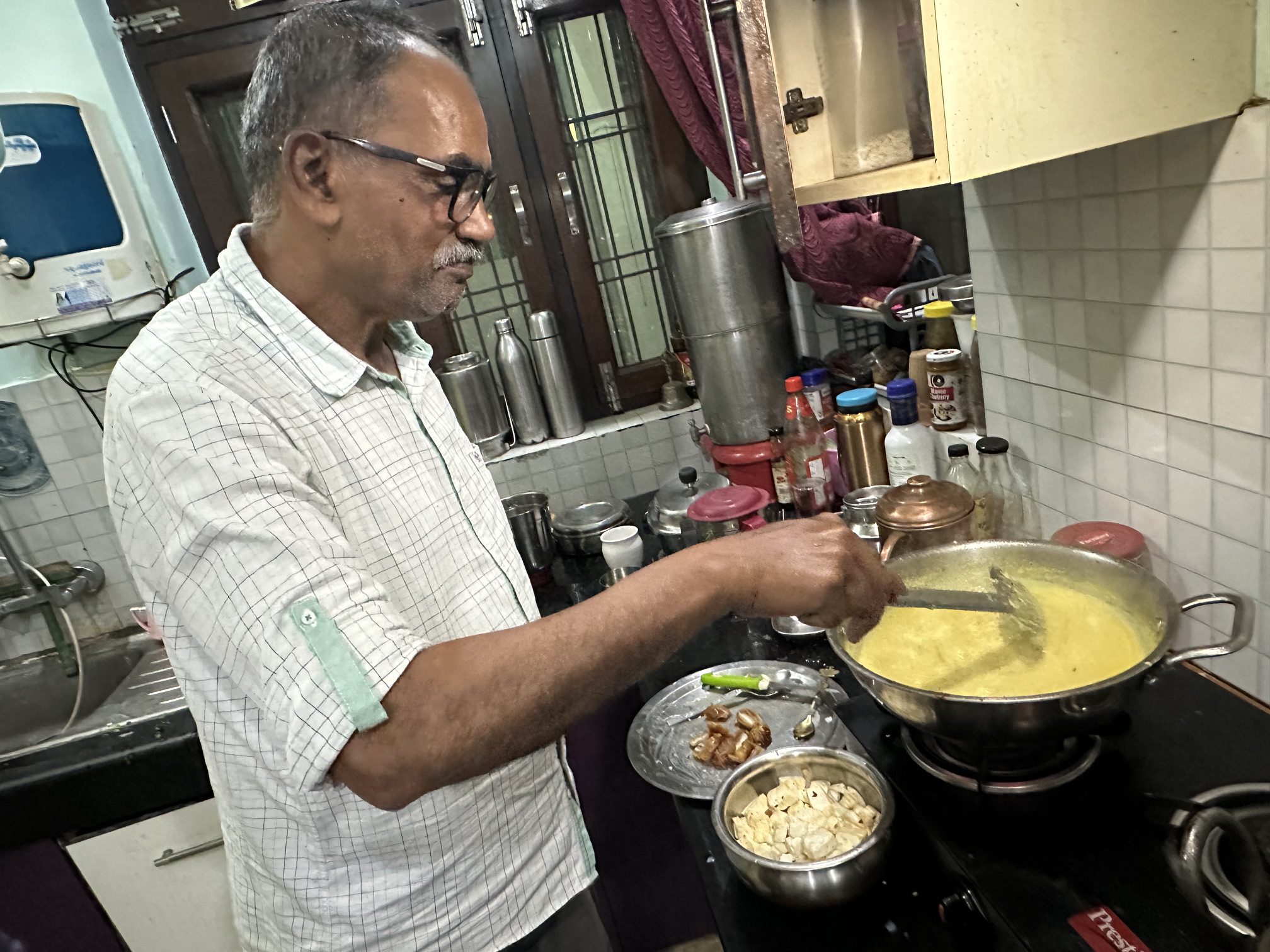
I would not allow Jane to pay for anything during our time together, including her taxi ride to meet me. We had a bit of a disagreement about this, but eventually she became okay receiving my generosity. We walked through the markets, shared a meal together at Tunday Kababi, and before our day was finished, she invited me to her home later in the week to experience her father’s cooking before I left Lucknow.
I laughed at myself because I completely adored Jane and wanted to spend as much time with her as I could without coming across as some creepy older guy wanting to spend time with a woman half my age.
Being welcomed into someone’s home is common in India, where family remains the center of life. But what stood out to me about Jane’s family was watching her father move around the kitchen, preparing food and caring for his daughters. He challenged some of the assumptions I carried about traditional roles. Here was a man who had helped raise strong, confident, educated daughters, and now he was the caregiver in the home.
I was sorry he did not speak English because I wanted to tell him directly what an amazing job I thought he had done with his family. Even writing that brings tears of joy to my eyes.
There was nothing romantic or physical between Jane and me. Only the experience of being touched by another person’s open heart and generous spirit. She reminded me of the kind of connection that does not need a label to be meaningful.
What? Leave Lucknow? Leave Jane? Why would I want to leave after being treated so well?
As my time in Lucknow came to an end, I did not want to leave without seeing Jane one last time, so I invited her to dinner. It was a little awkward for me because I could feel the ending approaching. I was sad. I did not want this connection to end, but my experience has taught me that many relationships slowly drift apart as people return to their own lives.
Dinner ended, but neither of us seemed quite ready for the evening to finish. So we went somewhere else for dessert. A little more conversation. A little more time. A little more appreciation for this brief moment where two lives crossed paths.
Eventually we said goodbye, carrying on in different directions, but with another reminder of why I traveled to India in the first place.
Not only to see beautiful places, but to experience beautiful humans.
Prayagraj, India
When Understanding Brings Us Closer
My draw to Prayagraj was twofold. It is home to the Kumbh Mela, the largest religious gathering in the world, but more importantly, it was the home of Ayush, a sweet man I met at a Vipassana retreat in Sarnath, India back in 2018. We had kept in touch over the years, and after all this time I finally had the opportunity to visit him in his hometown.
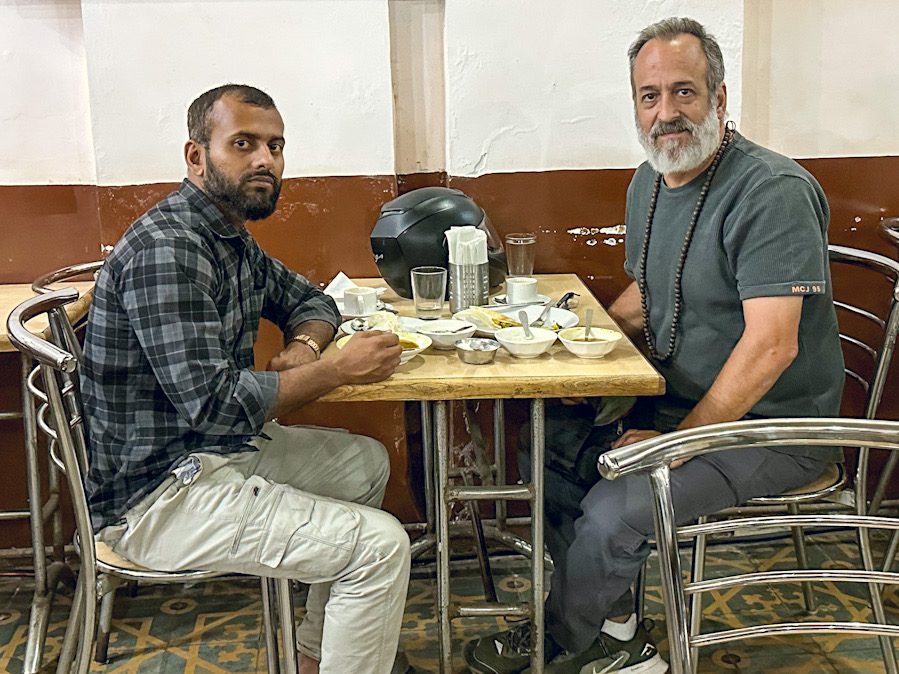
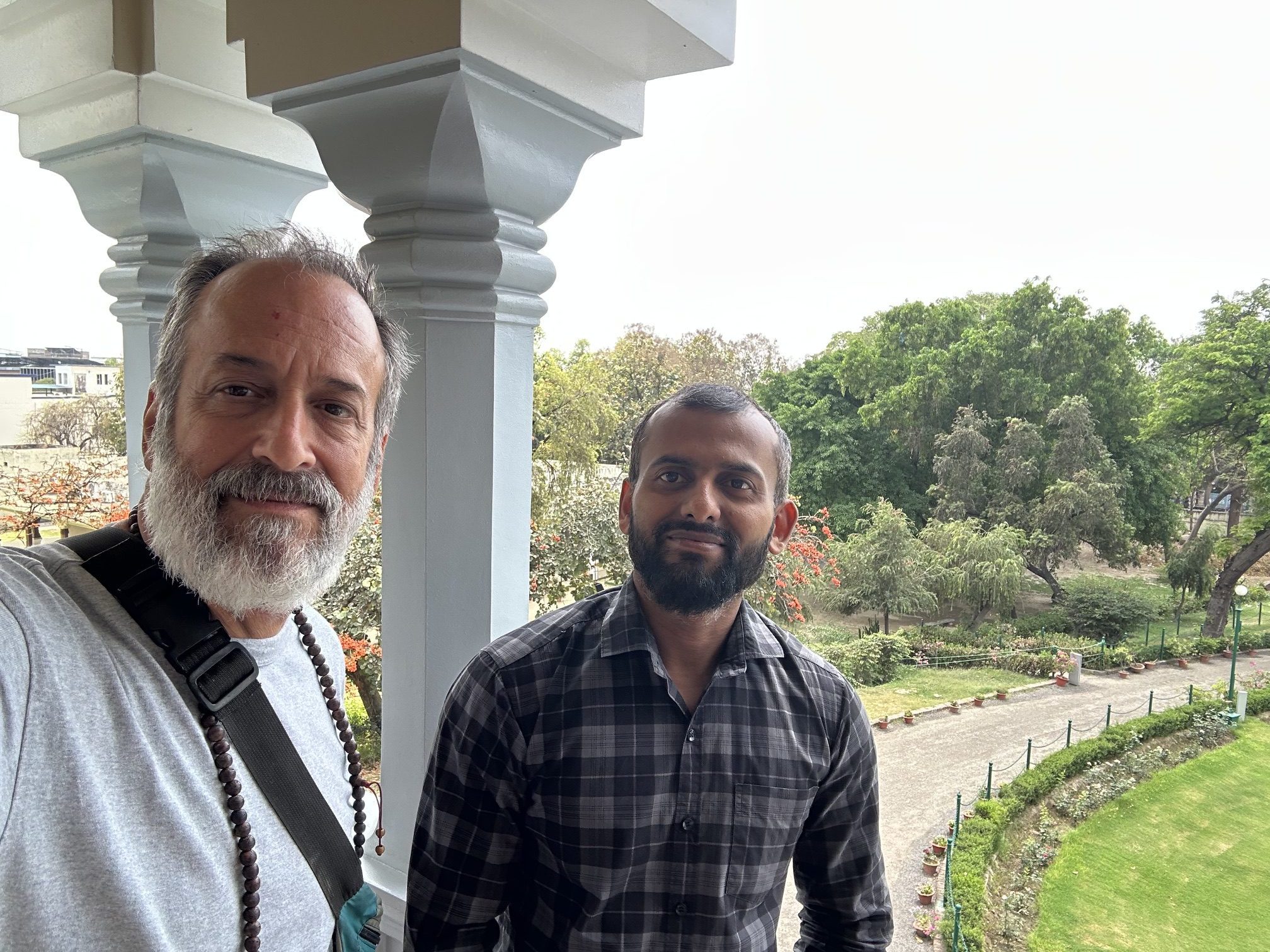
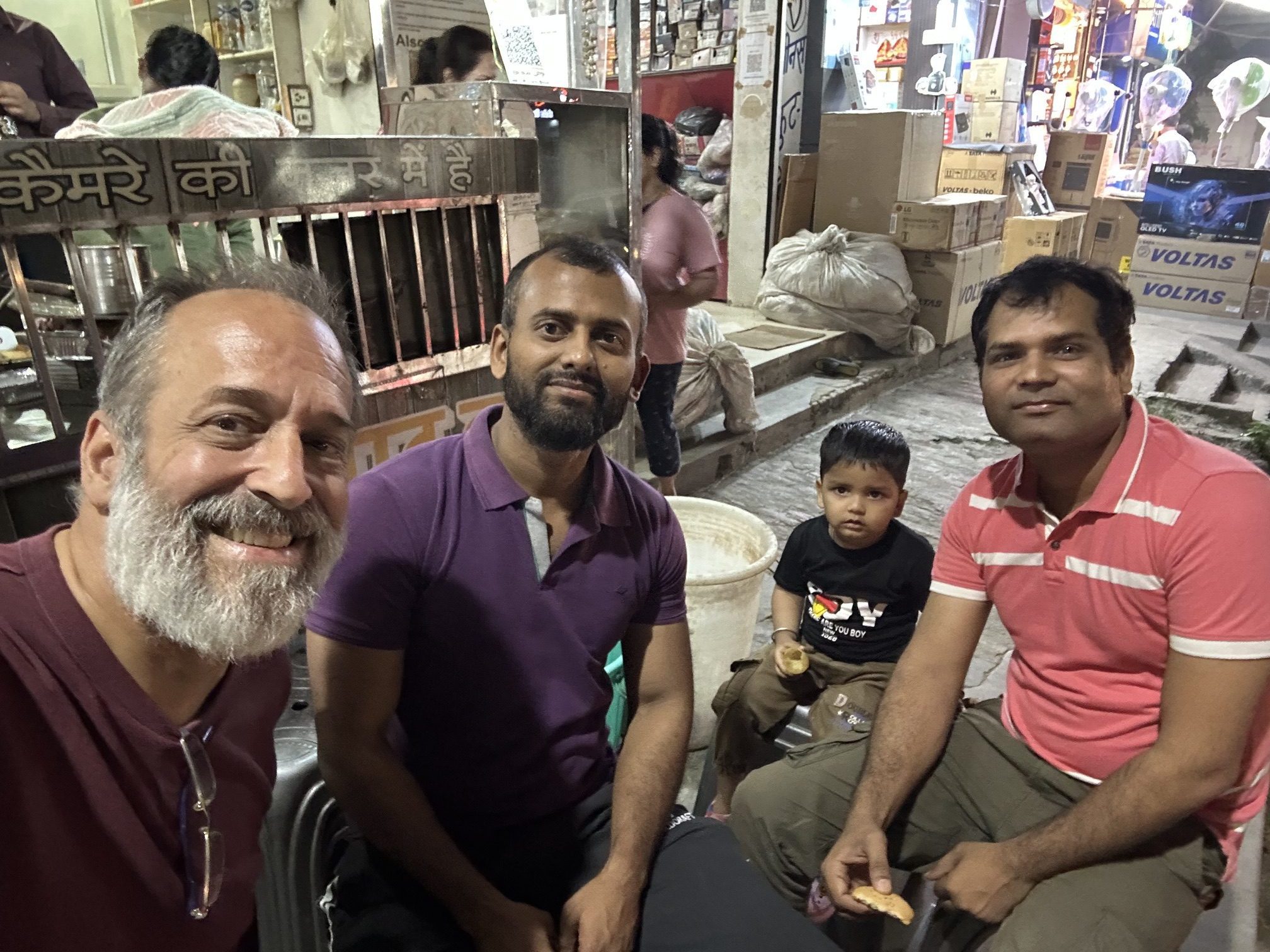
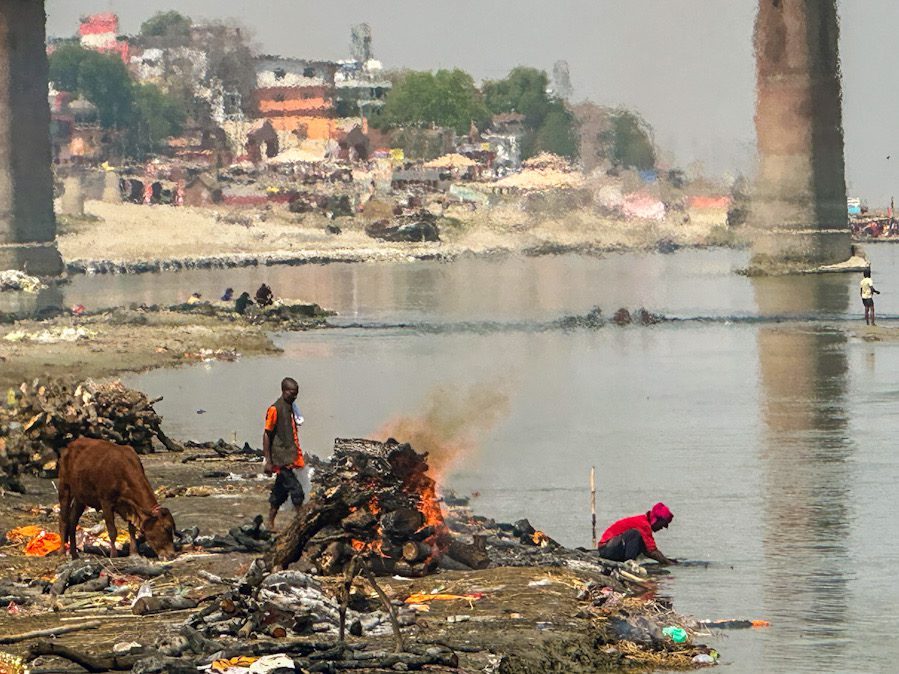
I still remember Ayush and his friends from that retreat. What I remember the most was how they spoke about the pressure they were carrying as first-generation college students. Their parents had sacrificed so much to provide them with secondary education that they never had themselves, and with that opportunity came the responsibility of not wanting to disappoint the families who believed in them. What I admired was how they chose to respond to that pressure. They were not looking to escape through alcohol, drugs, or distractions. They were sitting silently at a Vipassana retreat learning how to cultivate peace of mind in the middle of everything they were carrying. That left a big impression on me, even to this day.
When I arrived in Prayagraj, Ayush wanted to make sure I was happy with my accommodations. Before doing anything else, he came to inspect my room himself. I laughed because it was such a small gesture that said so much. Back then, we were two strangers sitting together at a meditation retreat. Now this young man was checking my hotel room like a concerned family member making sure I was comfortable and taken care of.
From there, he brought me to his home to share a meal and reconnect. Ayush had completed two master’s degrees and was teaching social science at a private school nearby. He lived with his father, aunt, uncle, and cousins in a multigenerational family home. His auntie seemed genuinely happy I was there and happy to be cooking for us.
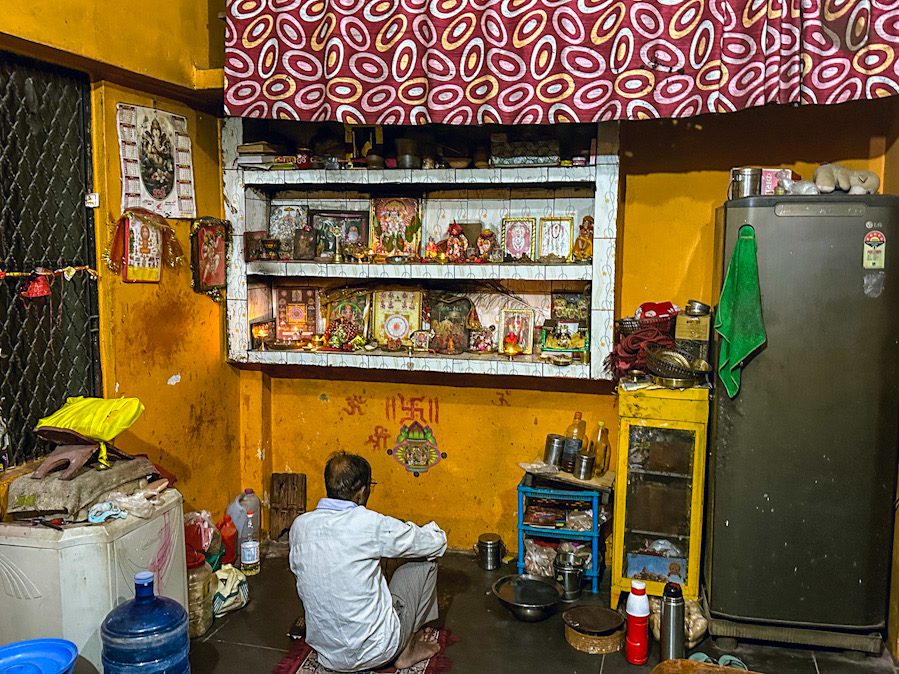
When I walked into his home, one of the first things I noticed was the family altar and his uncle sitting quietly in prayer. Throughout my travels in India, I found myself deeply moved by the reverence people have for their faith and spiritual practices. I also became aware of how much I did not understand. India is a place with such a long and complex spiritual history, with many traditions, beliefs, and ways people understand their relationship with life and the divine. I asked Ayush about his family’s Brahman background and their religious practices because I wanted to understand more about this part of the world. As always, he patiently answered my endless questions. That is something I appreciate about Ayush, his openness and willingness to share his world with me.
Our conversations naturally moved through the topics that interest me most about being human. Religion, relationships, money, love, family, life expectations, and the choices we make while trying to find our place in the world. Eventually, I asked him about his love life. It was almost as if he had been waiting for someone outside of his circle to talk to about this.
He told me about his girlfriend. They have known each other for a while and had fallen in love. The challenge was that they came from different religious backgrounds. Her father would not approve of the relationship. She was 100% devoted to the relationship and he was 70% because of this dilemma.
Before spending time in India, I had my own assumptions about arranged marriage and family involvement in choosing a partner. From a Western perspective, it can be easy to only see the restrictions placed on individual choice. But conversations like this helped me appreciate the deeper complexity. Family, religion, tradition, responsibility, and community are woven together in ways that are difficult to understand from the outside. The choices people make are not only about individual desire. They are connected to generations of relationships and obligations.
Understanding that did not take me away from Ayush’s experience. It brought me closer to him because this was not really a conversation about arranged marriage. It was a conversation with a young man trying to navigate love, loyalty, family, culture, and his future.
To spend time together, Ayush and his girlfriend would drive forty kilometers outside the city to avoid being discovered. They did not show public affection. They did not kiss. Their relationship existed within boundaries that were difficult for me to imagine. Yet underneath all those differences was something immediately familiar. Two people trying to love each other.
Ayush told me she was completely committed to their relationship, but he carried the quiet grief of a dead end. He did not believe her father would change his mind, and he knew she would never go against her father’s wishes. My heart went out to them.
Ayush had spent much of his life focused on education, family responsibility, and building his future. He had not traveled much and wanted to hear about my experiences around the world. I told him that travel does not always require crossing oceans. Exploring your own country, meeting new people, and stepping outside your normal life can open your heart just as much.
We have about a twenty-year age difference, and he always insists on calling me “Sir.” I keep reminding him to stop and call me Maurice, but he never listens. Somehow that became one of my favorite things about him.
During my time in Prayagraj, Ayush gave me as much of himself as he could. Between his work, family responsibilities, and girlfriend, his life was already full. Sometimes he felt badly when he could not spend more time with me, but I assured him I was okay and could make good use of my time. Still, whenever he could, he showed up.
He took me around Prayagraj, showing me the historical buildings, temples, and the sacred river confluence where the Kumbh Mela is held. But when I think back on Prayagraj, it is not the temples or even the sacred rivers that return first. It is sitting inside his family home sharing a meal. It is his auntie cooking for us. It is his uncle sitting quietly in prayer. It is the young man who inspected my Airbnb because he wanted me to be comfortable. It is my friend trusting me enough to share the questions and uncertainty he was carrying in his own heart.
Eight years after meeting at a meditation retreat, two people from different generations, cultures, and parts of the world were sitting together again. Still talking, still learning, and still connected. That is what I carried away from Prayagraj.
Agra, India
Finding the Sacred in Conversation
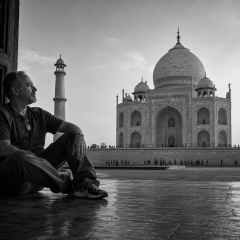
I decided to stay in Agra for five days, with travel days on either side, giving myself a full week in a place many people visit for only a day or two. It was more than enough time to see the famous sites, and then some. What I enjoyed most was having the freedom to choose when and what I wanted to do. There was no rush, no checklist, and no pressure to get anywhere except wherever my curiosity wanted to take me.
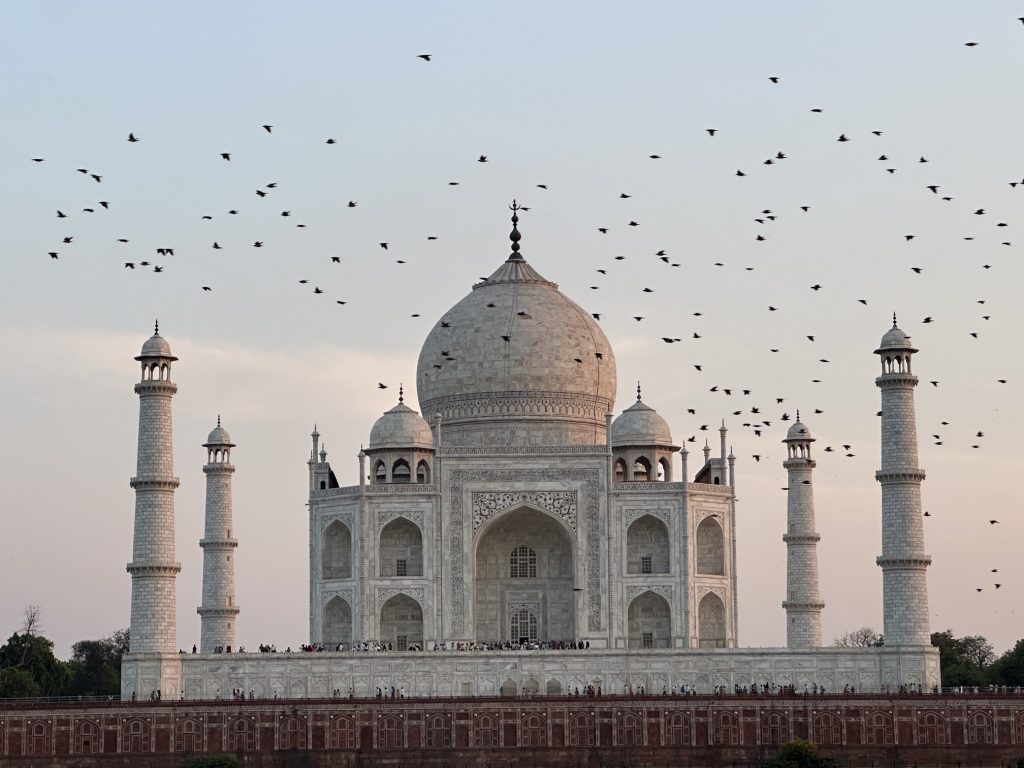
One day I planned to visit Kinari Bazaar, Jama Masjid, the Baby Taj Mahal, and eventually make my way to Mehtab Bagh to watch the sunset across the river from the Taj Mahal. My only real commitment was arriving at the river’s edge before the sun disappeared. Until then, I gave myself permission to meander, sit quietly inside these historical places, admire the craftsmanship, and imagine what it might have been like to be alive during those times.
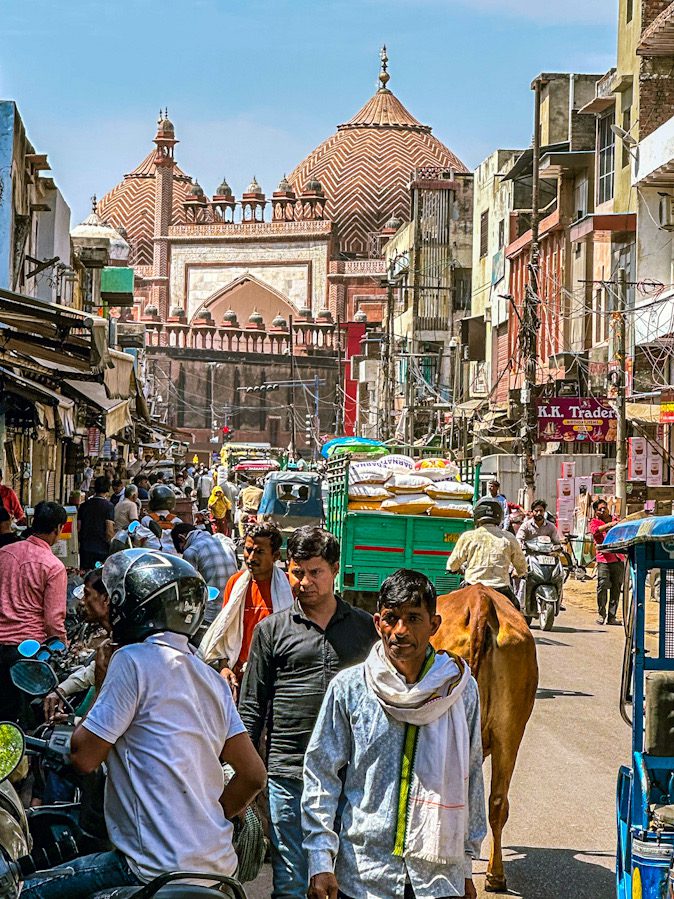
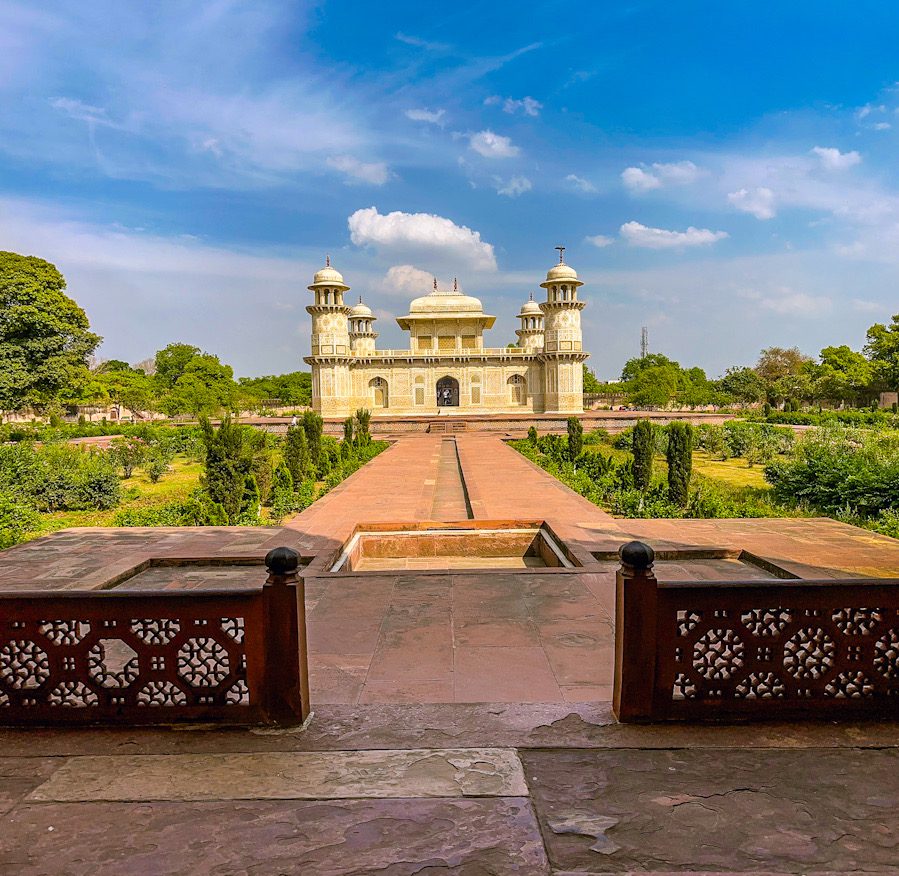
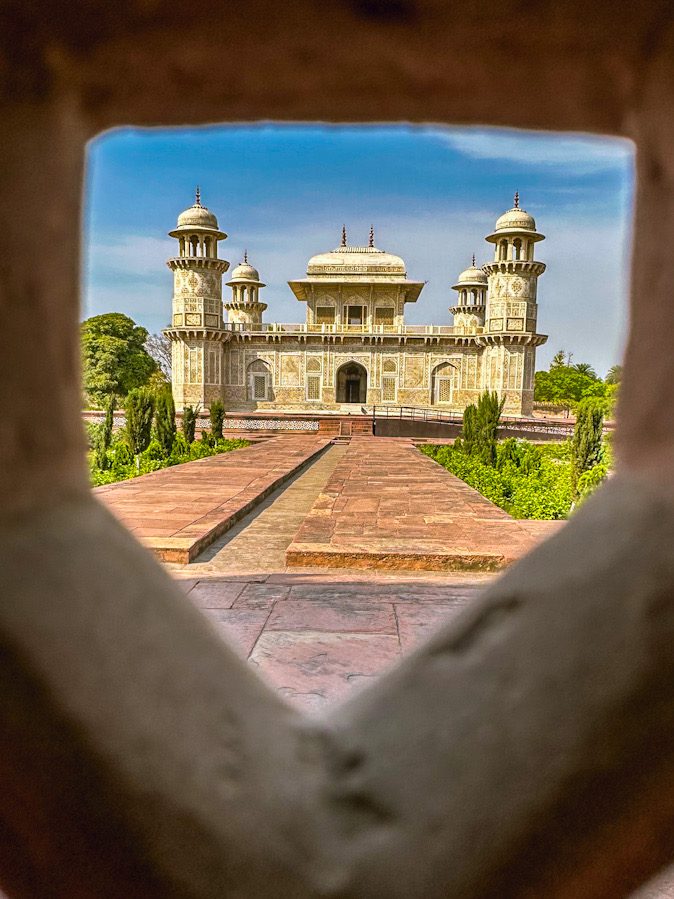
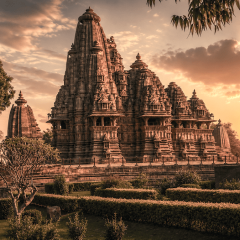
I have always loved sitting inside old buildings. There is something about touching the stone, looking at the construction, and wondering about the people who built them and who once occupied these spaces. Who were they? What were their lives like? What conversations happened here hundreds of years before I arrived? While sitting in the large open room of the Baby Taj Mahal, I met a young man taking a short holiday from his law school examinations. He had come to Agra to explore the architecture and history of the city.
I see some of my father in myself. Saying hello to strangers, starting conversations, and being curious about the person sitting beside me. That was him, and somewhere along the way, it became part of me too.
We started with the usual small talk that happens when strangers meet while traveling. Where are you from? What is your work? Why did you come to India? How long are you staying? It was not long before the conversation moved into deeper territory. He wanted to know about my religion and whether I believed in God.
I smiled because I knew this was not going to be a simple yes-or-no conversation. Here we were, a young Hindu law student and a Jewish-born American traveler sitting inside a Mughal tomb talking about God, religion, identity, and what it means to live a spirit-full life. These are the unexpected moments that keep drawing me toward travel.
When people ask where I am from, I sometimes struggle with giving a simple answer. National identity feels more complicated to me than it once did. That question doesn’t seem as simple as it once was for me. What I tell people is the history of how my family immigrated from Eastern Europe in the late 1800s. Identity has always felt more complicated to me than the country written on a passport.
Religion feels somewhat similar. I have always been skeptical of certainty and the ways extreme religious beliefs can sometimes separate us from each other. My relationship with spirituality has become less about belonging to a particular group and more about recognizing the common threads that exist across many traditions. Treat others the way we want to be treated. Love thy neighbor. Recognize ourselves in others. Be good caretakers of this earth we share.
But he was a law student, and the law student wanted an answer. “Do you believe in God?”
I asked him what he meant by God. Was he talking about a bearded man somewhere in the sky? Was he talking about the thousands of gods represented throughout Hindu traditions? Was he talking about Allah or Shiva or Jesus? Maybe something beyond our ability to describe?
He smiled but was not going to let me escape the question that easily. He asked me not to avoid his yes-or-no question. I laughed because I could feel the attorney in him already practicing.
As our conversation continued, he asked about my travels throughout India. When he heard about some of the places I had visited that held deep religious significance, he started recommending other sacred places I needed to see if I wanted to truly live a spirit-full life and transcend the cycle of reincarnation central to Hindu belief.
I appreciated his sincerity and the beliefs he had in his faith. And I also saw things differently.
I told him that temples, rivers, pilgrimages, and sacred places can all have deep meaning. I understand why people travel thousands of miles to visit places that connect them to something greater than themselves. But I also believe the most sacred place we ever have access to is the place where we are standing in this very moment.
Maybe the conversation we were having was the most sacred spiritual experience we were searching for. Two strangers from different cultures, different generations, and different beliefs sitting together, listening, questioning, disagreeing, and still respecting each other. Maybe how we choose to meet each other matters as much as where we choose to go.
We continued this polite discussion, or maybe polite disagreement, for quite some time. I could feel his attorney mind searching for clarity, and he could probably feel my resistance to turning some of life’s biggest questions into simple answers. Neither one of us convinced the other, and maybe that was never the point.
Eventually, it was time to move along. Or so I thought.
I took one more walk around the Baby Taj Mahal to absorb the beauty of the inlay stone construction before heading toward the river, preparing myself for the onslaught of souvenir sellers, taxi drivers, and street vendors. As soon as I stepped outside the peaceful walls of the monument, the other side of India greeted me. I was instantly surrounded by men offering services, trinkets, and snacks. Feeling my personal space being encroached upon, I sternly asked them to step back, bought a drink and a snack, and sat down on a bench to calmly negotiate my ride to the river.
Without realizing it, I had sat down right beside the same young law student. Our conversation, it seemed, wasn’t finished.
He immediately tried to buy the drink and snack I had already paid for—one of those reflexive, quiet gestures of hospitality I experienced so many times throughout India. But I noticed a shift in his posture. The confidence of the aspiring attorney debating spirituality inside the quiet tomb had vanished, replaced by a vulnerability that caught me a little off guard. He looked at the chaos surrounding us, then turned to me with a look of genuine concern.
“When you tell your stories about India to your people,” he asked, “please don’t talk about this part.”
He meant the noise. The aggressive sellers. The relentless negotiations. He wanted me to carry home an image of India that was pristine, spiritual, and unblemished—the ideal version he carried in his head and loved so deeply. He was worried this raw, chaotic reality would ruin the picture.
In that moment, the debate was over. I was no longer sitting beside a law student trying to trap me into a yes-or-no answer about the cosmic divine. I was sitting beside a young man fiercely protective of his home, feeling the weight of how his culture might be perceived by a Western stranger.
I looked at him, then out at the crowd of vendors, and then back at him again…. I felt a profound wave of calm come over me.
“I understand,” I told him. “The people all around us selling things aren’t bad people. They are human beings trying to make a living, feed their families, and create a better life. We have different circumstances and different ways of surviving, but underneath it all, we’re navigating the exact same basic human needs.”
I realized then that this was the answer to the question he had asked me inside the monument. We had spent an hour looking around the history of the place, looking backwards in time, debating text and tradition to define where God resides. Yet the most sacred space wasn’t inside the quiet symmetry of the Mughal tomb, nor was it waiting for me at the next grand temple down the river.
It was right here. On a noisy bench, enveloped by the smell of urine, street food and the constant blare of tuk-tuk horns, sitting with a young man who just wanted his world to be understood. The sacred wasn’t a destination; it was the willingness to see past the chaos and recognize yourself in the person sitting right beside you.
The silence took over our conversation while the honking horns of Agra continued in the background…



Leave a Reply